

Key Takeaways
- Skin that looks dull or starts feeling congested usually isn’t caused by one thing. It’s a mix — buildup on the surface, oil sitting in pores, slower turnover, sometimes dehydration layered on top.
- Both treatments here are used for that, but they approach it differently. HydraFacial is more about clearing things out and restoring balance without stressing the skin. Chemical peels go further and intentionally remove layers so the skin has to regenerate.
- Some people need one, some the other, and quite often it’s not a strict either/or. The decision usually comes down to how reactive the skin is and how far the concern has progressed.
Why Skin Becomes Dull or Congested
When dull or congested skin shows up, it’s rarely sudden. It builds gradually.
Dead skin cells don’t shed as efficiently, so they sit on the surface longer than they should. That alone can make skin look flat. At the same time, oil keeps moving through the pores. When it mixes with debris or environmental residue, it starts to collect instead of clearing out.
You don’t always get breakouts. More often it’s subtle — uneven tone, a rougher feel, pores that look more visible, skin that just doesn’t reflect light the same way.
Circulation and hydration also play a part. If the skin is slightly dehydrated, everything slows down a bit. The surface looks tired even if there’s no active acne.
That’s usually the point where topical products stop being enough and some form of skin exfoliation becomes necessary.
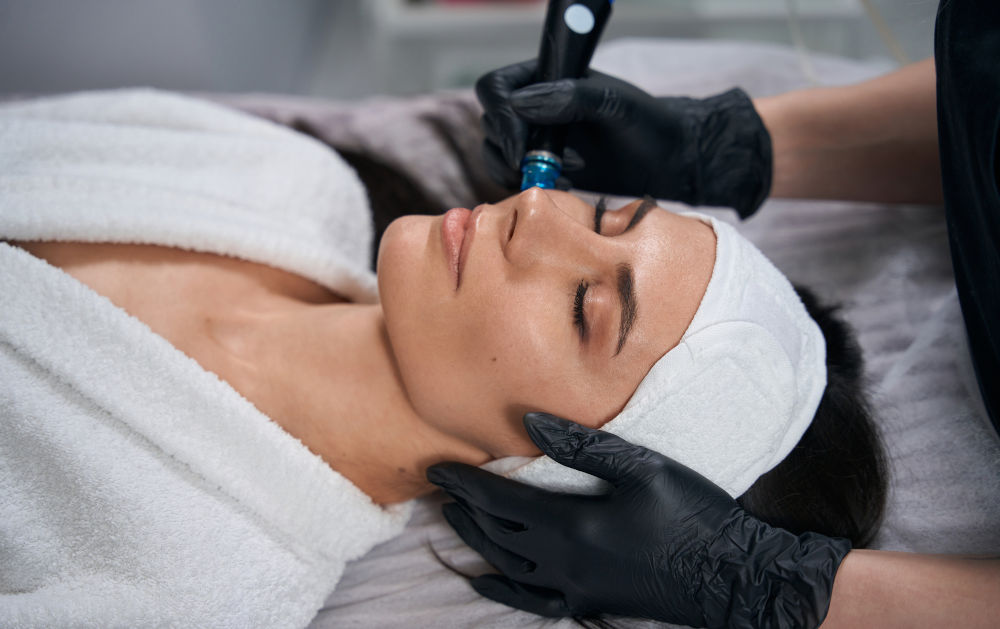
What Is a HydraFacial Treatment?
A HydraFacial treatment is not aggressive, and that’s part of why people choose it.
It works in stages. First, a light exfoliation to loosen what’s sitting on the surface. Then a suction-based step — often described as vortex extraction — which lifts debris out of pores rather than pushing it around.
After that, the skin is infused with serums. Hydration is the main focus, but depending on what’s used, it can also include antioxidants or mild resurfacing ingredients.
What stands out is how the skin looks right after. Clearer, more hydrated, but not irritated. No peeling phase, no recovery time.
It’s often used for pore cleansing, early congestion, or as a way to keep skin stable when it tends to fluctuate.
It doesn’t push the skin hard. It resets it.
What Is a Chemical Peel?
A chemical peel treatment takes a different approach. Instead of clearing pores, it removes layers.
Acids are applied to the skin in a controlled way. They break down the bonds between cells so the outer layer sheds more quickly. What comes through underneath is usually smoother and more even.
There isn’t just one type. Some peels are light and sit close to the surface. Others go deeper and are used for more persistent concerns like pigmentation or uneven texture.
Because of that, the reaction varies. With milder peels, you might just notice dryness. With stronger ones, there can be visible peeling over several days.
The goal is skin resurfacing — not just improving how the skin looks in the moment, but changing how it renews itself over time.
It’s more active than a HydraFacial, and the skin behaves differently after.
Chemical Peel vs HydraFacial — Key Differences
When comparing chemical peel vs HydraFacial, the difference isn’t subtle once you look at how each one works.
| Aspect | HydraFacial | Chemical Peel |
|---|---|---|
| Depth | Surface-focused | Can go deeper depending on type |
| Focus | Cleaning + hydration | Resurfacing + correction |
| Downtime | None | Possible peeling or sensitivity |
| Immediate result | Skin looks clearer right away | Skin changes over several days |
| Best for | Maintenance, mild congestion | Texture, pigmentation, deeper issues |
HydraFacial is usually where people start. It’s predictable, comfortable, and doesn’t interrupt daily routines.
Chemical peels are chosen when that level of treatment isn’t enough anymore.
That’s really the core of chemical peel vs HydraFacial — not which is better overall, but how much change the skin actually needs.
Which Treatment Is Better for Dull Skin?
For skin that just looks flat or tired, HydraFacial tends to make sense first.
It improves hydration quickly, and once the surface is cleared, light reflects differently. The skin looks fresher without going through a recovery phase.
As a treatment for dull skin, it works when the issue is mostly surface-level.
Chemical peels come into the picture when dullness is tied to something deeper — uneven tone, sun damage, areas where the texture isn’t smooth anymore.
In those cases, hydration alone won’t shift things much. Removing that outer layer does.
Which Treatment Is Better for Congested Skin?
Congestion usually means clogged pores, but how it shows up can vary.
HydraFacial physically removes buildup. It’s effective for blackheads and general congestion, especially when the skin is sensitive or reactive. As a treatment for congested skin, it clears things without leaving the skin irritated afterward.
Chemical peels work more on prevention. By speeding up turnover, they reduce how easily pores become blocked in the first place.
For ongoing congestion or acne-prone skin, that can make a difference over time.
So one clears what’s there. The other changes how quickly it comes back.
Can HydraFacial and Chemical Peels Be Combined?
A HydraFacial and chemical peel combination is sometimes used, but not layered together in a single visit.
More often, HydraFacial is used in between peel treatments. It helps keep the skin hydrated and stable while still managing buildup.
Peels are then introduced at intervals, depending on how the skin responds.
Timing matters here. Too much exfoliation too close together can push the skin into irritation rather than improvement.
When spaced properly, the treatments don’t compete. They fill different roles.
Skin Treatments at Philosophy of Beauty
At Philosophy of Beauty, treatment decisions are not preset. The same concern — dullness or congestion — can come from different underlying patterns.
Some skin needs hydration first before anything more active is introduced. Other cases require a stronger reset from the beginning.
The focus is on reading how the skin behaves, not just how it looks at one moment.
For patients considering skin treatments Toronto, this usually means starting with one approach and adjusting over time rather than committing to a fixed plan.
Book a consultation to determine the best treatment for your skin type and concerns.
Frequently Asked Questions
Is HydraFacial better than a chemical peel?
Not in a general sense — they’re designed for different levels of correction. HydraFacial is usually used for maintenance, hydration, and mild congestion, while chemical peels are more appropriate when there are deeper concerns like pigmentation or uneven texture. The better option depends on how the skin is behaving rather than a fixed preference.
Which treatment is best for clogged pores?
HydraFacial is effective for clearing existing buildup because it physically removes debris from the pores. Chemical peels, on the other hand, help reduce how quickly pores become clogged again by improving cell turnover. In some cases, both are used at different stages of treatment.
Can chemical peels improve dull skin?
Yes, especially when dullness is linked to uneven texture or sun damage. By removing the outer layer of skin, chemical peels allow a smoother and more even surface to emerge. The effect is not immediate, but it tends to be more noticeable over time.
Is there downtime after a HydraFacial?
There is typically no downtime. Most patients leave the clinic with skin that looks clearer and more hydrated rather than irritated. In some cases, there may be very mild redness, but it usually settles quickly.
How often should I get a HydraFacial or chemical peel?
HydraFacial can be done regularly, often every few weeks, depending on how the skin responds. Chemical peels are spaced further apart because the skin needs time to recover and regenerate. The exact timing is usually adjusted based on individual skin condition and goals.
Can sensitive skin tolerate chemical peels?
In some cases, yes, but the type and strength of the peel need to be selected carefully. Superficial peels are often used when the skin is more reactive. A consultation is important to avoid overstimulating the skin.
Which treatment gives faster results?
HydraFacial tends to give immediate visible improvement in clarity and hydration. Chemical peels take longer, as the skin goes through a renewal process before the final result becomes visible. The trade-off is that peels can produce more noticeable changes in certain cases.