

Many people schedule a HydraFacial about once a month, but that does not mean every skin type needs one every four weeks. Some patients enjoy regular maintenance treatments. Others come in occasionally, before an event, or when their skin starts to feel particularly dry or congested.
So, how often should you get a HydraFacial? A useful schedule depends less on the calendar and more on what your skin is doing: how congested or dehydrated it is, whether it is sensitive, what you use at home, and how it responded to your last treatment.
Key Takeaways
- A monthly HydraFacial is a common maintenance choice, not a requirement for healthy skin.
- Treatment frequency should reflect congestion, dehydration, sensitivity, home skincare, and individual goals.
- Oily or acne-prone skin does not automatically need more frequent treatment.
- Reactive or irritated skin may benefit from a gentler approach, a longer interval, or postponing treatment.
- Occasional treatments can make sense when the goal is a temporary boost in hydration and radiance.
- The best schedule can change over time as your skin, products, and other treatments change.
How Often Should You Get a HydraFacial?
For someone who enjoys HydraFacial as part of regular skin maintenance, an appointment roughly every four to six weeks is a common pattern. HydraFacial itself notes that some people prefer monthly sessions, while others find that every two or three months suits them perfectly well.
That difference matters.
A patient trying to manage recurring congestion may have a very different schedule from someone who books a facial twice a year before special occasions. Someone dealing with temporary dehydration after travelling may only want one treatment.
There are broadly four ways patients tend to use HydraFacial: regular maintenance, occasional help with congestion or dehydration, pre-event treatment, or simply an intermittent skin refresh.
None is inherently better.
Your HydraFacial frequency should be based on what you are trying to maintain or improve. Booking more often does not automatically produce a better result.
How Often Should You Get a HydraFacial for Your Skin Type?

Skin type is a useful starting point, but it should not become a prescription.
Two people can both have oily skin and need completely different routines. The same is true for dryness and sensitivity.
Oily and Congested Skin
If blackheads, oiliness, or mild pore congestion return regularly, HydraFacial may fit into an ongoing skincare plan.
The question is how quickly the congestion comes back.
If your skin stays comfortable and relatively clear for several weeks after treatment, there may be little reason to shorten that interval. If buildup returns quickly, the provider should look not only at the appointment schedule but also at cleansing, exfoliating products, makeup, sunscreen, and other products used at home.
Oily skin does not automatically mean “book more often.”
And clogged pores are not the same as inflammatory acne.
Painful papules, pustules, nodules, or cystic acne need a different conversation. The American Academy of Dermatology recommends a structured acne treatment plan rather than repeated exfoliation as a substitute for medical acne care.
Dry and Dehydrated Skin
HydraFacial can leave dehydrated skin feeling smoother and more comfortable, particularly because hydration is incorporated into the treatment.
How often you repeat it depends partly on how long you enjoy that improvement.
One person may like monthly maintenance during a dry Canadian winter. Another may book occasionally after travel or seasonal changes.
Neither approach is wrong.
What a facial cannot do is compensate indefinitely for an unsuitable routine at home. If skin feels tight again three days later, the answer may not be another HydraFacial. Your cleanser, moisturizer, retinoid use, exfoliation habits, or environment may deserve more attention.
Sensitive or Reactive Skin
There is no standard schedule for a HydraFacial for sensitive skin.
Treatment can be modified by changing the exfoliation, suction level, solutions, or boosters used. More importantly, the skin needs to be assessed on the day.
If it is already stinging, peeling, inflamed, sunburned, or reacting to ordinary skincare, another exfoliating treatment may be poorly timed.
The AAD notes that exfoliation can worsen dryness and irritation when it is too aggressive or combined with products such as retinoids or benzoyl peroxide.
Sensitive skin may therefore need a longer interval—or simply a pause until the barrier has recovered.
For patients with rosacea-prone skin, our guide to HydraFacial for rosacea explains why treatment sometimes needs to be softened or postponed altogether.
Combination or Generally Balanced Skin
If your skin is generally comfortable and you are not managing persistent congestion or dehydration, there is no rule saying you need professional exfoliation every month.
You may prefer HydraFacial occasionally because you like the way your skin looks before a holiday, celebration, or busy work period.
Others simply enjoy having it incorporated into a longer-term maintenance routine.
Both are reasonable.
Healthy skin does not become unhealthy because you skip a monthly facial.
HydraFacial Frequency by Skin Goal
| Skin Goal | Scheduling Considerations |
| General maintenance | Monthly appointments are common, but longer intervals may work equally well for some patients. |
| Mild congestion | Consider how quickly congestion returns and how comfortably the skin tolerates treatment. |
| Dehydration and dullness | Base frequency partly on how long the visible benefit lasts and whether home skincare is managing the problem. |
| Sensitive skin | Allow enough recovery time and adjust treatment according to the skin’s response. |
| Pre-event glow | An occasional appointment may be enough; allow time for your individual reaction. |
| Multiple concerns | Coordinate HydraFacial with other treatments rather than booking each procedure independently. |
This is general guidance, not a prescribed treatment calendar.
Can You Get a HydraFacial Too Often?
Yes. It is possible to schedule HydraFacials more frequently than your skin needs.
That does not mean frequent HydraFacials inevitably damage the skin. It means there is little benefit in repeatedly exfoliating skin that is already irritated or struggling to recover.
Signs that the schedule deserves another look include persistent redness, increased sensitivity, unusual dryness or tightness, irritation that lingers after treatment, or skincare products suddenly stinging when they normally do not.
Your other products matter here too.
If you already use retinoids, exfoliating acids, acne treatments, or other active products, the total amount of exfoliation your skin receives may be more important than the facial interval alone. The AAD specifically cautions that overlapping exfoliation with irritating skincare can worsen dryness and redness.
How Long Should You Wait Between HydraFacial Treatments?
There is no biological rule that every person must wait exactly four weeks.
Monthly treatment became a popular maintenance pattern because it is practical and works well for some patients—not because every skin cell must complete a prescribed renewal cycle before another HydraFacial.
The appropriate treatment interval depends on intensity, skin response, and why you want another session.
If your skin is comfortable and you are maintaining hydration or clarity, your provider may recommend a regular schedule. If the skin remains sensitive, you have recently added strong active skincare, or another resurfacing treatment is planned, waiting longer may be the better choice.
This is why deciding how often to get a HydraFacial should remain flexible.
How Often Should You Get a HydraFacial for Acne-Prone Skin?
The answer to how often should you get a HydraFacial for acne is not “every two weeks.”
HydraFacial may be helpful when the issue is mild congestion, oily buildup, or clogged pores. That does not make it a standalone acne treatment.
Active inflammatory acne behaves differently from ordinary congestion. More facials do not necessarily mean fewer breakouts, and repeated HydraFacials should not be promoted as a proven way to prevent acne scars.
If breakouts are persistent, painful, inflamed, or leaving scars or pigmentation, the treatment plan should address acne itself.
HydraFacial may still have a supporting role for selected patients, but the schedule needs to fit around that wider plan.
How Often Should You Get a HydraFacial Before a Special Event?

You do not need months of HydraFacials simply because you have a wedding, photoshoot, birthday, or other important date approaching.
For many patients, a single treatment is enough when the goal is temporary hydration and a fresher-looking complexion.
Timing is worth thinking about, though.
If it is your first HydraFacial, do not assume you need to book it at the last possible moment. Although downtime is generally limited, individual skin can still become temporarily pink or sensitive.
Trying the treatment before a less important occasion can give you a better sense of how your own skin responds.
You can also review what to expect at your HydraFacial treatment before your first appointment.
Do You Need Monthly HydraFacials to Maintain Results?
No.
A HydraFacial every month may help someone maintain the particular smooth, hydrated appearance they enjoy after treatment. That is different from saying everyone needs monthly appointments to keep their skin healthy.
HydraFacial results are temporary. So is the visible glow after most facials.
But daily skincare is doing the real day-to-day work: gentle cleansing, adequate moisturization, sunscreen, and appropriate active ingredients where needed.
For someone prone to recurring congestion, maintenance might involve periodic professional treatment. For someone whose main goal is hydration before important occasions, occasional treatment may be plenty.
Our separate guide on how effective a HydraFacial is looks more closely at what results the treatment can and cannot realistically provide.
How Should You Schedule HydraFacial Around Other Skin Treatments?
This is one of the biggest reasons not to create a HydraFacial schedule in isolation.
Chemical peels, microneedling, RF microneedling, laser treatments, and other resurfacing procedures all affect the skin in different ways. Adding HydraFacial too close to another treatment may simply create more exfoliation or irritation than the skin needs.
There is no universal waiting period that works for every combination.
Timing depends on what was performed, how intensive it was, how well the skin has recovered, and what is planned next.
Tell your provider about procedures performed elsewhere too. A treatment calendar only makes sense when everyone knows what the skin has recently been through.
How to Build a Personalized HydraFacial Maintenance Plan
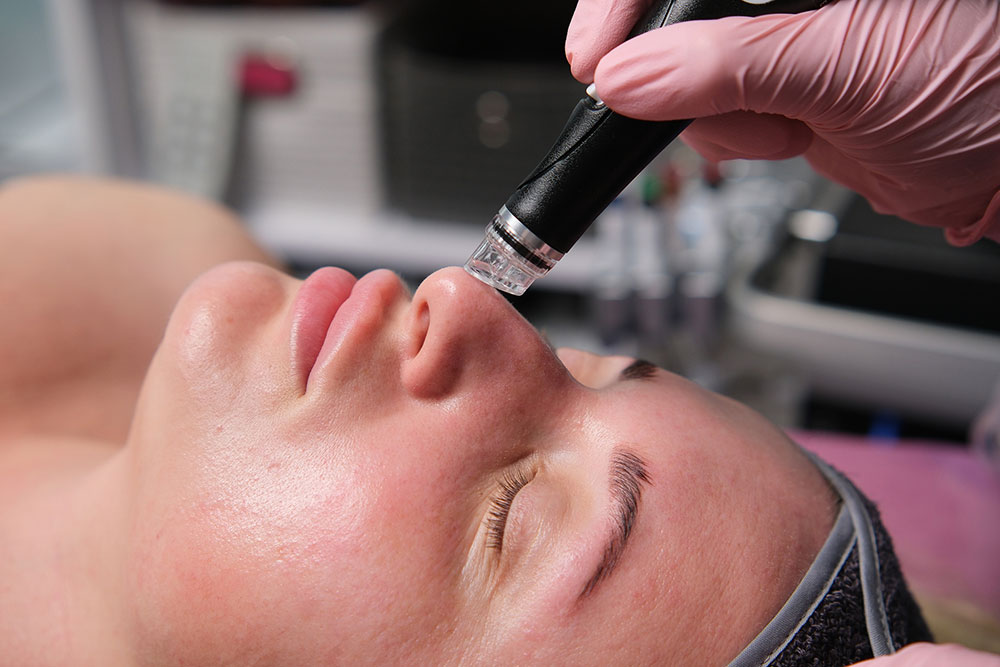
A useful HydraFacial maintenance plan starts with five questions.
First, what are you actually trying to change—congestion, dryness, dullness, or simply the way the skin looks before an event?
Next, how sensitive is your skin, and what active ingredients are already part of your routine?
Then look at the previous appointment. Did the skin settle quickly? How long did you notice a benefit? Did anything feel irritated afterward?
Other aesthetic treatments and upcoming events should be added to the same calendar rather than treated separately.
Finally, reassess.
Your ideal schedule in January may not be your ideal schedule in July. Skin changes with weather, hormones, stress, medications, travel, skincare, and age.
There is no prize for sticking to a treatment interval that no longer makes sense.
Personalized HydraFacial Treatments at Philosophy of Beauty
At Philosophy of Beauty, our approach to HydraFacial treatment starts with the skin in front of us rather than an automatic monthly booking.
For patients considering HydraFacial Toronto or HydraFacial North York treatments, we look at hydration, congestion, sensitivity, current skincare, previous response, and other procedures already in the plan. Philosophy of Beauty also serves patients from Vaughan and surrounding areas.
As founder Dinara Shakirova, RN, explains:
“I don’t think a good skincare plan should be built around an automatic four-week appointment. Some patients love monthly HydraFacials, while others need them much less often. I would rather look at how the skin is responding and adjust the schedule than keep treating simply because the calendar says it is time.”
The aim is a schedule that complements your home care—not one that replaces it.
Not sure how often your skin would benefit from a HydraFacial? Book a consultation at Philosophy of Beauty to discuss your skin concerns and create a personalized treatment schedule.
Frequently Asked Questions
How often should you get a HydraFacial?
Monthly appointments are common, but they are not necessary for everyone. Your ideal interval depends on skin condition, sensitivity, goals, home skincare, and how long you notice a benefit after treatment.
Is it necessary to get a HydraFacial every month?
No. A monthly HydraFacial is one maintenance option rather than a requirement. Patients with balanced skin or occasional treatment goals may be perfectly satisfied with longer intervals.
Can you get a HydraFacial every two weeks?
A HydraFacial every two weeks may be offered in selected circumstances, and the manufacturer notes that shorter intervals can be used for some treatment plans. That does not mean every skin type benefits from such frequent exfoliation.
How often should you get a HydraFacial for oily skin?
There is no standard interval for oily skin. Frequency should depend on the amount of congestion, how quickly it returns, the products being used at home, and how well the skin tolerates treatment.
How often should you get a HydraFacial for acne-prone skin?
HydraFacial may support the management of mild congestion, but active inflammatory acne requires a different assessment. More frequent facials should not be used as a substitute for an appropriate acne treatment plan.
Should sensitive skin have HydraFacial treatments less frequently?
Sometimes. Sensitive skin may need reduced exfoliation, lower suction, different products, or more recovery time. If the barrier is already irritated, postponing treatment may be preferable to simply extending the interval.
Can you get too many HydraFacials?
You can schedule treatments more frequently than your skin needs. Persistent redness, tightness, increased sensitivity, or irritation may indicate that the treatment plan, home skincare, or spacing between procedures needs reassessment.
How often should you get a HydraFacial before a special event?
One treatment may be enough when the goal is a temporary boost in hydration and radiance. If it is your first HydraFacial, schedule with enough time to learn how your skin responds rather than booking immediately before the event.
Can you alternate HydraFacial with chemical peels or laser treatments?
Potentially, but the timing should be planned by your provider. Peels, lasers, HydraFacial, and other resurfacing treatments affect the skin differently, so sequencing depends on the procedures, treatment intensity, and how well your skin has recovered.