

“Double chin” is a useful description, but not a diagnosis.
It may refer to soft fullness beneath the chin, a fold of loose skin, a weak chin profile, or a jawline that has gradually lost definition. From the front, these concerns can look surprisingly similar. From the side—and during a proper facial assessment—the differences become clearer.
Some patients have a distinct pocket of submental fat despite maintaining a stable weight. Others have very little fat but notice skin folding beneath the jaw. A shorter or recessed chin can also reduce the visible distance between the chin and neck, creating the impression of fullness where there is not much fat to remove.
Quite often, more than one factor is involved.
This is why selecting a double chin treatment from photographs or social-media results can be misleading. Belkyra injections reduce localized fat. They do not rebuild chin projection, reposition neck muscles, or remove significant loose skin. Skin-tightening procedures have a different role, while chin filler changes proportions rather than fat volume.
Understanding what causes a double chin comes first. Treatment makes more sense after that.
Key Takeaways
- A double chin is not always related to body weight.
- Common double chin causes include localized fat, loose skin, limited chin projection, genetics and age-related tissue changes.
- Belkyra is intended for suitable adults whose main concern is submental fat.
- Belkyra does not correct significant skin laxity or skeletal structure.
- A recessed chin may make the area beneath it look heavier even when little fat is present.
- Some patients benefit from a carefully sequenced combination of treatments.
- Facial assessment is more reliable than choosing a procedure based only on appearance.
What Does “Double Chin” Actually Mean?
The term usually describes reduced definition beneath the chin or along the upper neck. A clinician may refer to this as submental fullness, although that phrase can still cover several different anatomical concerns.
The profile of the lower face depends on more than the amount of fat beneath the skin. It is influenced by:
- where fat is stored;
- how well the skin retracts;
- the position and projection of the chin;
- jaw shape;
- neck muscle position;
- inherited facial proportions;
- changes in bone, fat and skin over time.
A person may therefore appear to have fullness beneath the chin even at a relatively low body weight. Another person may have a noticeable fat pocket but strong chin projection and firm skin, making the same amount of volume less obvious.
When patients ask what causes a double chin, the answer is often anatomical rather than simply “weight gain.”
What Can Cause a Double Chin?
Three factors account for many concerns seen in consultation: excess fat, skin laxity and limited chin projection.
They do not always occur separately.
A younger patient may have firm skin and genetically determined fat beneath the chin. Someone who has lost weight may have very little remaining fat but noticeable loose skin under chin and neck areas. Later in life, changes in fat position, skin quality, muscle tone and facial structure may all contribute at once.
The treatment direction changes depending on which factor has the greatest visual effect.
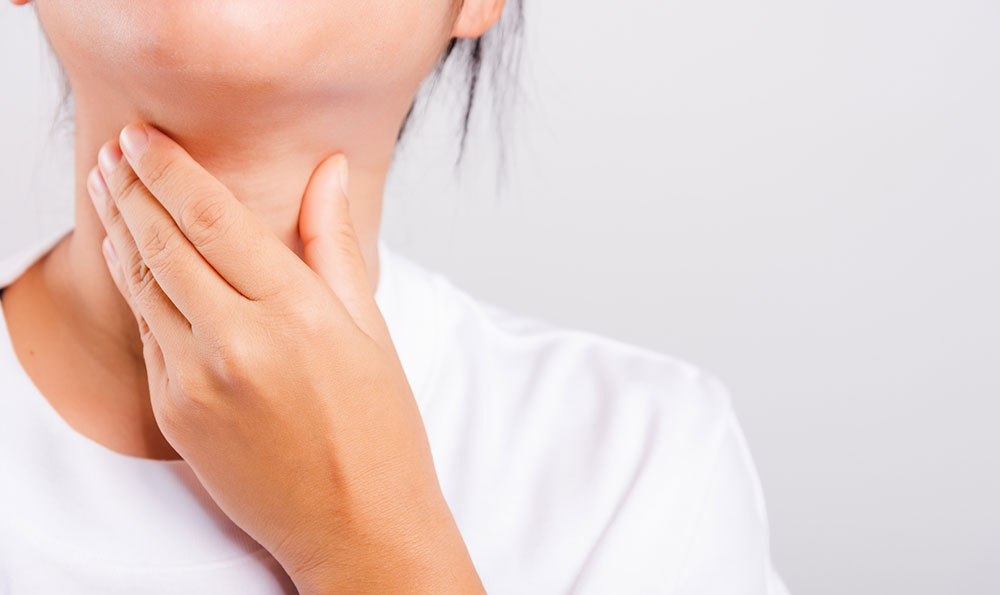
Cause 1 — Excess Fat Under the Chin
What Is Submental Fat?
Submental fat is a localized layer or pocket of fat beneath the chin.
It can be influenced by genetics, weight changes and natural fat distribution. Ageing may also alter where fat sits and how clearly the jawline can be seen. Some people notice that the area changes with overall weight; others retain fullness there even when their weight has remained stable for years.
Having submental fat does not mean someone is overweight. Much like fullness around the hips or lower abdomen, the distribution may simply be inherited.
This distinction matters because skincare, facial exercises and topical “firming” products cannot selectively remove a pocket of fat.
How Can You Tell If Fat Is the Main Concern?
Fat beneath the chin often feels soft and pinchable. The fullness may remain visible when the patient’s weight is stable, while the overlying skin still has reasonable elasticity.
That is only a rough observation. Skin, superficial fat and deeper neck structures sit close together, and it is easy to misjudge them without examining the area in person.
A patient may assume that a soft fold is entirely fat when skin laxity is contributing as much—or more. The reverse can happen too.
Which Treatments May Help Submental Fat?
For suitable adult patients, Belkyra may be considered when localized fat is the main concern.
Belkyra contains deoxycholic acid. Once injected into carefully selected submental fat, it disrupts the membranes of treated fat cells. The body then processes the cellular debris over time. Health Canada’s indication is specifically for improving moderate-to-severe fullness associated with submental fat in adults, and administration requires knowledge of the anatomy and neuromuscular structures in the area.
Belkyra treatment is normally planned as a series rather than a one-off injection. Temporary swelling is common and may be quite noticeable, particularly after an early session. Bruising, tenderness, numbness and firmness can also occur.
Patient selection matters. Double chin fat reduction injections are not intended to tighten a hanging fold of skin or compensate for a recessed chin. They reduce targeted fat volume; they do not correct every structure contributing to the profile.
Cause 2 — Loose or Sagging Skin
Why Does Skin Become Loose Beneath the Chin?
Skin gradually loses collagen, elastin and some of its ability to contract. Sun exposure, age, genetics and weight loss can all make this more apparent beneath the chin, where the skin is thin and constantly moving.
Loose skin may form a fold even when there is little fat underneath. In other cases, the skin sits over a modest fat pocket and exaggerates its appearance.
After substantial weight loss, the discrepancy can be especially clear: the volume has decreased, but the skin has not fully adapted to the smaller contour.
How Is Loose Skin Different From Submental Fat?
Loose tissue may look thin, crepey, wrinkled or folded. Fat tends to create softer volume.
The difference is not always obvious in a mirror. When skin and fat coexist, reducing one can reveal the other. Removing volume beneath skin with poor elasticity may leave the area looking less full but not necessarily tighter. In some cases, laxity becomes easier to see once the fat is reduced.
This is why Belkyra should not be described as a skin-tightening treatment. Cleveland Clinic similarly notes that deoxycholic-acid treatment is best suited to a double chin caused by excess fat and is not appropriate for significant excess skin.
Which Treatments May Help Loose Skin?
Non-surgical skin-tightening procedures use controlled energy or tissue stimulation to encourage collagen remodelling. At Philosophy of Beauty, available approaches include RF microneedling skin tightening and selected laser-based treatments.
These procedures may improve mild or moderate laxity, texture and skin quality. Improvement is gradual and depends on the amount of loose tissue, age, collagen response and the technology used.
They do not reproduce a surgical neck lift. Surgery can physically remove or reposition excess skin and deeper tissue; non-surgical treatment cannot create the same degree of structural change.
The right discussion is not simply whether tightening “works.” It is whether the expected degree of improvement matches the patient’s concern.
Cause 3 — Chin Structure and Facial Proportions
How Can a Small or Recessed Chin Create the Appearance of a Double Chin?
Chin projection changes the way the neck meets the lower face.
When the chin sits farther back, the visible distance from the tip of the chin to the upper neck is shorter. The chin-to-neck angle may look less defined, and even a small amount of tissue beneath the jaw can appear more prominent.
This is sometimes described online as a recessed chin double chin, though the issue is not that the chin itself creates fat. It changes the frame around it.
The side profile often reveals the distinction. A patient may have relatively little pinchable fullness but still feel that the lower face looks heavy or that the jawline disappears into the neck.
Reducing fat alone in this situation may produce only a limited change because the underlying facial proportions remain the same.
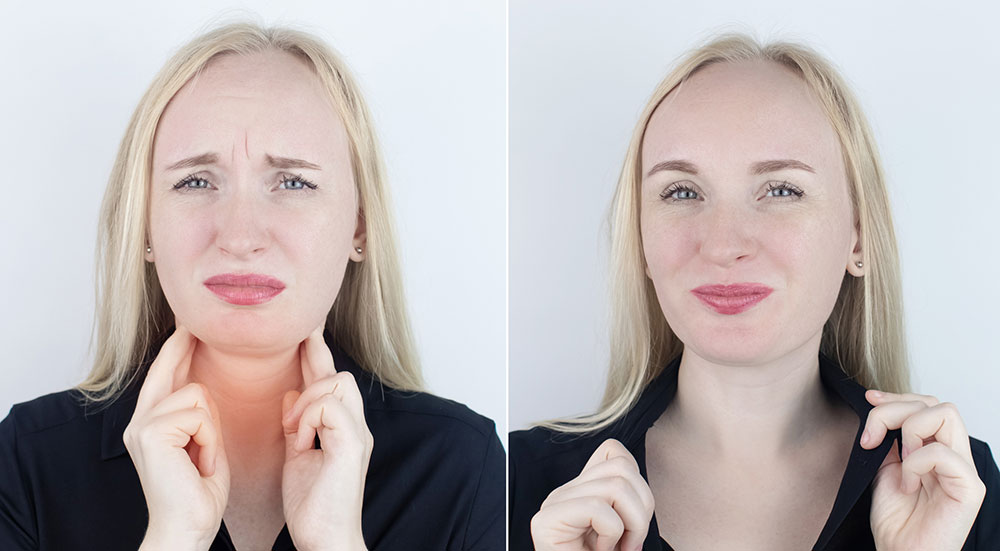
Which Treatments May Improve Chin Structure?
Selected patients may benefit from non-surgical chin contouring using dermal filler.
Chin filler adds projection or structural support. It does not remove fat. A small, carefully placed amount may improve the relationship between the lips, chin, jawline and neck, but the plan should be based on the full profile rather than an isolated desire for a “sharper chin.”
Philosophy of Beauty uses dermal fillers for chin balancing and jawline contouring where appropriate. Product firmness, amount, injection plane and overall facial proportions all influence the result.
Filler also has limits. It does not produce the degree of skeletal change possible with chin surgery, and adding too much volume can make the lower face look heavier rather than more defined.
Can More Than One Factor Cause a Double Chin?
Yes. Combined causes are common.
One patient may have a recessed chin with a small pocket of fat. Another may have moderate submental fat and early laxity. Following weight loss, skin may be the main issue, but some residual fat can remain. Age-related change may involve skin, fat, muscle position and bone support together.
Combination treatment may sometimes create a more balanced result than relying on one procedure. That does not mean everything should be done at once.
Treatment order matters.
Fat reduction may be completed before the final need for skin tightening is judged. Structural contouring may be planned first when chin projection is the dominant concern. In another case, improving skin quality before an injectable procedure may give a more predictable result.
The sequence should follow anatomy, not a preset package.
Fat, Loose Skin, or Chin Structure: How Are They Assessed?
A lower-face consultation normally includes more than pinching the tissue beneath the chin.
The provider may assess:
- the amount and distribution of fat;
- skin thickness and elasticity;
- chin projection;
- jaw shape;
- the angle between the chin and neck;
- neck bands or muscle-related changes;
- symmetry;
- previous filler, surgery or fat-reduction treatment;
- medical history;
- preferred downtime;
- whether the desired change is realistic without surgery.
| Primary concern | Common appearance | General treatment direction |
| Submental fat | Soft, pinchable fullness | Fat-reduction treatment |
| Loose skin | Thin, folded, lax or crepey tissue | Skin-tightening approach |
| Limited chin projection | Shorter profile or weak chin-to-neck angle | Structural contouring |
| Combined causes | Fullness with laxity or limited projection | Personalized, sequenced plan |
This comparison is educational only. It cannot establish a diagnosis or confirm treatment suitability.
Is Belkyra the Right Treatment for Every Double Chin?
No.
Belkyra injections may be appropriate when localized submental fat is the main concern, the patient’s anatomy can be treated safely and the skin has enough elasticity to adapt reasonably as volume decreases.
The patient should also be comfortable with the likelihood of swelling and understand that several sessions may be discussed.
Belkyra may not adequately address:
- significant loose skin;
- pronounced neck bands;
- limited chin projection;
- fullness caused mainly by deeper neck anatomy;
- severe laxity;
- expectations that would require surgical correction.
The treated fat cells are disrupted and do not regenerate as the same cells. That does not mean the area is permanently protected from every future change. Remaining fat cells can enlarge with weight gain, while aging may alter skin and tissue position over time.
What Results Can You Realistically Expect From Non-Surgical Treatment?
The result depends first on whether the correct problem was treated.
Belkyra may reduce a localized fat pocket. Skin tightening may improve mild laxity. Filler may bring the chin forward and create better profile balance. None of these procedures does the work of all three.
The amount of improvement also depends on anatomy, tissue quality, treatment intensity, number of sessions and individual response.
Non-surgical treatment generally aims for better definition and a more balanced lower face. It should not be presented as equivalent to liposuction, a neck lift or chin surgery.
Sometimes the appropriate recommendation is a modest change. Sometimes it is a combination. Occasionally, a responsible consultation concludes that a non-surgical procedure is unlikely to deliver enough improvement.
Double Chin Assessment at Philosophy of Beauty
At Philosophy of Beauty, treatment planning begins with the cause of the concern rather than the name of a trending procedure.
The assessment looks at whether the profile is being affected primarily by submental fat, loose tissue, chin position or several factors together. Recommendations may include fat reduction, skin tightening, structural contouring or no treatment at all if the available options do not match the patient’s goal.
“What patients call a double chin can come from very different anatomical factors. Before recommending treatment, we need to determine whether we are seeing fat, skin laxity, limited chin projection, or a combination of concerns.”
— Nurse Sharon Churikov, RN, Philosophy of Beauty
Patients considering double chin treatment Vaughan or elsewhere in the Greater Toronto Area can book a consultation to discuss what is creating the change in their profile and which non-surgical options, if any, are reasonable.
The first step is not choosing between injections, filler and a tightening device. It is deciding what actually needs to be treated.
Frequently Asked Questions
What is the most common cause of a double chin?
There is no single cause that applies to everyone. Localized fat is common, but genetics, skin laxity, chin projection and age-related changes may be equally important. Many patients have more than one contributing factor.
Can you have a double chin without being overweight?
Yes. Natural fat distribution is partly genetic, and some people store fat beneath the chin despite having a stable or relatively low body weight. A recessed chin or loose skin can also create a double-chin appearance without substantial excess fat.
How can I tell whether my double chin is caused by fat or loose skin?
Fat often feels soft and pinchable, while loose skin may look thin, wrinkled or folded. These features overlap, so they should not be used for self-diagnosis. An in-person assessment can evaluate the skin and underlying tissue separately.
Can loose skin under the chin be treated without surgery?
Mild to moderate laxity may improve with professional skin-tightening procedures that stimulate collagen remodelling. Non-surgical treatment cannot remove large amounts of excess skin or create the same correction as a neck lift.
Does a weak or recessed chin make a double chin look worse?
It can. Limited chin projection shortens the visible distance between the chin and neck, which may make the submental area appear fuller and reduce jawline definition.
Does Belkyra tighten loose skin?
No. Belkyra targets localized fat cells. It is not designed to remove or significantly tighten loose skin. Skin quality must be considered before treatment because laxity may remain after the fat volume decreases.
How many Belkyra treatments may be needed?
The number varies according to the amount of fat, anatomy, response and desired change. Belkyra is commonly planned as a treatment series, but a fixed number should not be promised before assessment.
How long does swelling last after Belkyra?
Swelling is common and is often most noticeable during the first several days. Some fullness, firmness or tenderness may last longer. The duration varies between patients and may differ from one session to another.
Are the fat cells treated with Belkyra permanently removed?
The treated fat cells are disrupted and cleared by the body. They do not grow back as the same cells. Remaining fat cells can still enlarge after future weight gain, and ageing can continue to affect the jawline and skin.
Can chin filler improve the appearance of a double chin?
It may improve profile balance when limited chin projection contributes to the appearance. Chin filler adds structure; it does not reduce submental fat or tighten loose skin. Some patients may need a different treatment or a carefully planned combination.