
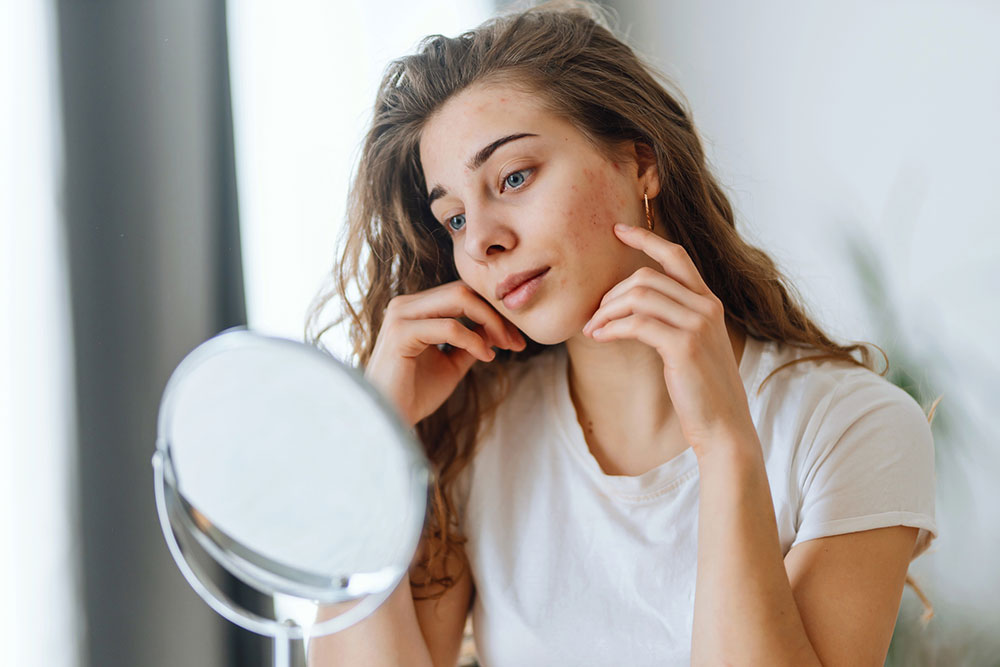
One person gets a few blackheads around the nose. Another develops painful bumps along the jaw every month. Someone else has tiny forehead spots that never quite disappear, despite changing cleansers again and again.
All three may call it acne. The skin is not doing the same thing in each case.
Acne on the face begins when oil and dead skin cells collect inside a follicle. From there, the picture can go in several directions. A pore may remain blocked without becoming inflamed. It may turn into a red pustule. In deeper cases, inflammation spreads through the surrounding tissue and produces a painful nodule or cyst.
Hormones, inherited skin tendencies, cosmetics, irritation and everyday habits may be involved too. Usually there is more than one influence, which is why copying another person’s routine often produces disappointing results.
The first useful step is to work out what kind of breakout is present. Treatment follows from that.
Key Takeaways
- Facial acne is not limited to teenagers.
- Blackheads, whiteheads and deep inflammatory breakouts behave differently.
- Oil, blocked follicles, bacteria and inflammation are part of the acne process.
- Hormonal changes, genetics and unsuitable products may affect how often breakouts appear.
- Stronger skincare is not always better skincare.
- Deep or persistent acne deserves early attention because it carries a greater risk of scarring.
- Procedures may support treatment, but daily care remains the foundation.
What Causes Acne on the Face?
Acne develops in the small follicles that contain a hair and an oil gland.
When the gland produces more sebum and dead cells do not shed freely, the follicle begins to fill. If the opening stays closed, a whitehead forms. If it remains open, the material at the surface darkens through oxidation and becomes a blackhead. The colour is not dirt.
Cutibacterium acnes live naturally on the skin. Inside a blocked follicle, it can contribute to inflammation. The result may be a small red bump or something much deeper and more painful. Mayo Clinic describes oil, dead skin cells, bacteria and inflammation as the main biological drivers of acne.
That still does not explain why one person breaks out and another does not.
Hormonal shifts can increase oil production, which is one reason breakouts may change during puberty, pregnancy, parts of the menstrual cycle or adulthood. Genetics affects how readily the follicles clog and how strongly the skin becomes inflamed.
Stress may make existing acne harder to settle, though it is rarely the whole explanation. Hair products, thick cosmetics, heavy sunscreens, helmets, tight straps and repeated friction can also influence the pattern.
Sometimes the location gives a clue. Forehead congestion may sit beneath a fringe or along the edge of a hair product. Jawline acne may follow a hormonal rhythm. Breakouts beneath a mask may involve heat, friction and occlusion.
These are clues, not rules. The same-looking breakout can have several contributors.
Not Every Pimple Is the Same
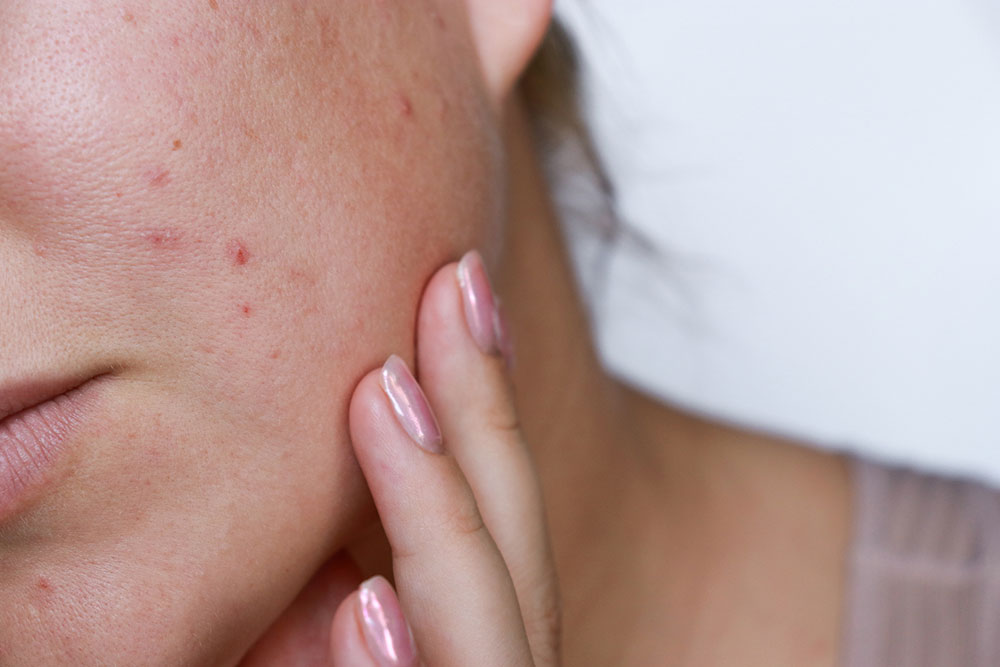
Whiteheads and blackheads are forms of comedonal acne. The follicle is blocked, but the inflammation may be limited.
Papules are red, raised and tender. Pustules have a visible white or yellow centre. Both sit closer to the surface than nodules and cysts.
Nodules are deeper, firmer and often painful. Cystic lesions may feel softer but still involve inflammation below the surface. They can remain for weeks and are more likely to leave a scar.
Most faces do not fit one tidy category. A patient may have blackheads across the nose, small papules on the cheeks and two recurring nodules near the chin.
That mixture matters. A treatment chosen for oily, clogged skin may not be enough for deep inflammatory acne. Strong extractions on an already painful lesion may make matters worse.
A useful facial acne treatment plan is built around the most significant type of acne present—not simply the total number of spots.
What Usually Belongs in an Acne Skincare Routine?
The basics are not glamorous: cleanser, treatment, moisturizer and sunscreen.
A mild cleanser removes oil, makeup and sunscreen without leaving the face tight or squeaky. Washing repeatedly throughout the day rarely helps. It often adds irritation.
The treatment step depends on the acne.
Retinoids help keep follicles from clogging and also reduce inflammation. Benzoyl peroxide lowers acne-causing bacteria. Salicylic acid can be useful for blackheads and surface congestion. Azelaic acid may help both active breakouts and the brown marks they leave behind.
The American Academy of Dermatology strongly recommends topical retinoids and benzoyl peroxide within acne care. Its current guideline also supports salicylic acid, azelaic acid and combination treatment for appropriate patients.
Combination treatment does not mean applying everything in the bathroom cabinet.
A retinoid used too frequently may cause peeling and soreness. Benzoyl peroxide can be drying. Acids layered together may leave the skin inflamed enough that every other product begins to sting.
The moisturizer is not the enemy. Acne-prone skin still needs its barrier. A light, non-comedogenic formula can make active treatment easier to tolerate.
Then comes patience. Skincare rarely changes established acne in a week. The first useful signs may take six to eight weeks, while deeper acne often needs longer. Switching routines every few days makes it difficult to know what is helping.
Where Do Professional Treatments Fit?
A clinic procedure can be useful, but it should have a defined job.
A superficial chemical peel may help a patient whose main issues are clogged pores, oiliness and post-acne discolouration. It may be a poor choice during a period of severe irritation or uncontrolled cystic acne.
HydraFacial can remove surface buildup and provide gentle extraction for selected patients with mild congestion. It is not a stand-alone answer for deep hormonal or nodular acne.
Laser and light treatments may be considered for certain forms of inflammation, redness or discolouration. Device selection matters, as do skin tone, current medication and the depth of the acne.
The procedure should fit the skin that is present on the day—not the name of a package.
This is where a customized acne treatment plan becomes useful. One patient may need to simplify an overloaded routine before having anything done in the clinic. Another may benefit from a peel alongside medical-grade acne skincare. Someone with painful nodules may need a medical referral rather than a facial.
When Are Prescription Treatments Needed?
Persistent acne is not always a cosmetic problem that can be solved with stronger retail products.
Prescription retinoids, topical combinations, antibiotics and hormonal therapies are used for selected patients. Isotretinoin may be considered for severe, deep or treatment-resistant acne under medical supervision. The AAD specifically recommends systemic options for acne that is severe or has not responded to standard topical care.
This matters most when the lesions are painful, widespread or beginning to scar.
Prescription treatment is also relevant when acne appears suddenly, follows an unusual pattern or may be linked to another medical issue. Pregnancy and pregnancy planning change which acne ingredients are suitable, so medication and skincare should be reviewed with a qualified medical professional.
Small Habits That Prevent Avoidable Breakouts
There is no perfect routine that prevents every pimple. A few habits do remove unnecessary obstacles:
- Wash gently rather than scrubbing.
- Remove makeup before bed.
- Choose products labelled non-comedogenic.
- Keep oily hair products away from the hairline.
- Avoid picking and squeezing.
- Change pillowcases and clean items that touch the face regularly.
- Introduce active ingredients one at a time.
- Wear sunscreen, especially when acne marks darken easily.
Picking deserves particular attention. It pushes inflammation deeper, lengthens healing and increases the chance that a flat mark or permanent scar will remain.
Over-exfoliation creates another common problem, irritation. Skin that is red, flaky and sore is not clearing more efficiently.
Can Facial Acne Leave Permanent Scars?
It can.
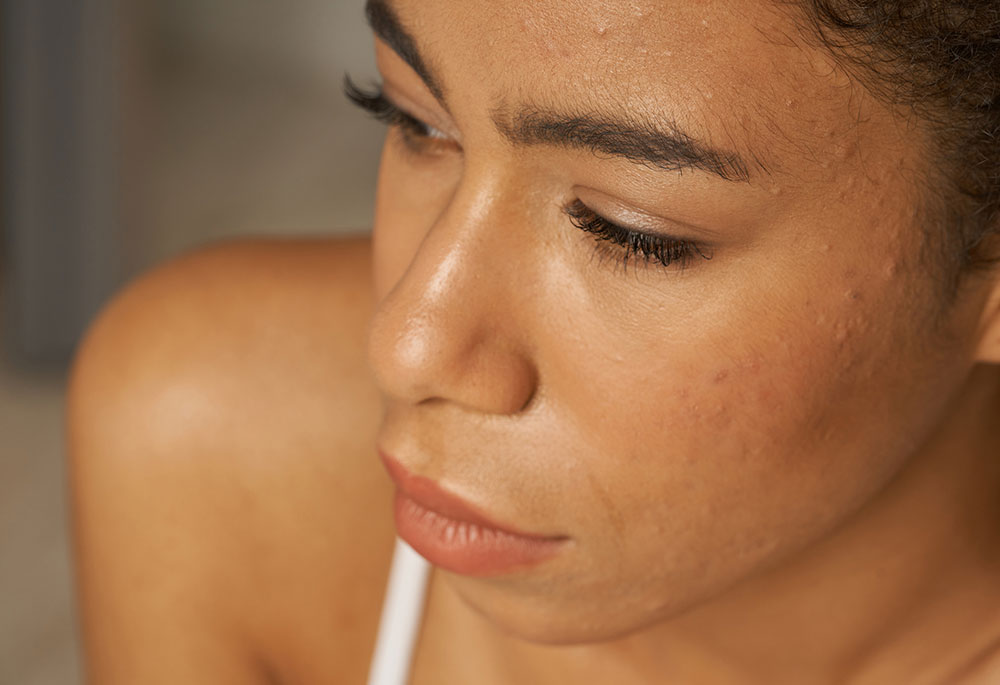
Deep inflammation damages tissue below the surface. As the skin repairs itself, it may produce too little collagen and leave an indentation, or too much and create a raised scar.
Nodules and cysts carry more risk than a small blackhead. Picking adds further trauma.
Early control of inflammatory acne is therefore part of acne scar prevention, though no treatment can promise that every scar will be avoided.
Active acne and acne scars also need to be separated. A red or brown flat mark is not the same as an indentation. The colour may fade over time. A structural scar usually requires a different type of treatment after the acne itself is stable.
Trying to resurface the face while new painful lesions are still forming rarely addresses the main problem.
Acne Treatment at Philosophy of Beauty
At Philosophy of Beauty, the starting point is not a standard facial. It is a closer look at what the skin is doing.
The consultation may consider the mix of blackheads, inflamed lesions and deeper breakouts; oiliness and sensitivity; hormonal patterns; current products; old marks; existing scars; and any previous treatment that has irritated the skin.
“Acne is rarely caused by a single factor, which is why successful treatment usually involves more than one solution. Understanding your skin and creating a personalized plan often leads to the best long-term improvements.”
— Philosophy of Beauty
Depending on the findings, the plan may include medical-grade skincare, chemical peels, HydraFacial or selected laser treatment. Prescription care or referral may be more appropriate when the acne is deep, painful or scarring.
Patients searching for acne treatment Toronto, North York or Vaughan options can book an assessment to clarify which part of the problem needs attention first.
A useful acne clinic Toronto patients can rely on should not promise clear skin from one facial or one product. It should be willing to distinguish blocked pores from inflammatory disease, irritation from oiliness, and active acne from the scars left behind.
Frequently Asked Questions
What causes acne on the face?
Facial acne develops when oil and dead skin cells block follicles. Bacteria and inflammation then contribute to whiteheads, blackheads and inflamed pimples. Hormones, genetics, cosmetics, friction and certain skincare products may also play a part.
Why do adults still get facial acne?
Adult acne may continue from the teenage years or begin later. Hormonal changes are common contributors, particularly when breakouts cluster around the chin and jaw, but products, stress and inherited skin tendencies may also be involved.
What is the best treatment for facial acne?
There is no single best treatment. Blackheads may respond to pore-clearing skincare, while painful nodules often need prescription care. The right plan depends on acne type, severity, skin sensitivity and scarring risk.
Can chemical peels help acne?
Superficial peels may help clogged pores, oiliness and some post-acne marks. They are not appropriate for every patient, and an overly strong peel may irritate already inflamed skin.
Does HydraFacial help with acne?
HydraFacial may help selected patients with mild congestion and surface buildup. It does not replace medical treatment for cystic, nodular or severe inflammatory acne.
How long does acne treatment take to work?
Many topical treatments need at least six to eight weeks before early improvement becomes clear. More significant change can take several months, particularly when acne is deep or hormonally influenced.
Can acne scars be prevented?
Prompt treatment of inflammatory acne and avoiding picking may lower the risk. Deep nodules and cysts can still scar despite good care, which is why they should not be ignored.
When should I see a professional for acne treatment?
Arrange an assessment when acne is painful, persistent, spreading, leaving scars or not improving after a consistent routine. Professional advice is also useful when a rash may be rosacea, folliculitis or another condition that resembles acne.