

“How many laser tattoo removal sessions will I need?” is usually the first question asked during a tattoo removal consultation. It is also one of the hardest to answer without seeing the tattoo.
There is no standard number that applies to everyone. A small, faded black tattoo placed lightly into the skin may respond quite differently from a small but heavily saturated cover-up. Two tattoos of the same dimensions can require very different treatment plans.
Colour, size and age all matter, but they are only part of the picture. Ink depth, pigment density, body location, skin type and the way an individual heals also influence the tattoo removal timeline. Even the original tattooing technique can make a difference.
Most tattoos therefore require a series of treatments rather than a single appointment. A professional assessment remains the most reliable way to estimate how many sessions may be needed and what degree of clearance is realistic.
Key Takeaways
- Most tattoos require multiple laser tattoo removal sessions.
- Treatment length depends on colour, ink depth, density, age, location and other factors—not size alone.
- Black and some dark pigments generally respond more readily than certain light or blended colours.
- An older tattoo may clear faster because some pigment has already faded naturally.
- Sessions must be spaced apart so the skin can recover and the body can process fragmented ink.
- Complete tattoo removal cannot be promised for every tattoo.
- A consultation provides the most useful estimate for an individual tattoo.
Why Does Tattoo Removal Take Multiple Sessions?
A tattoo is not simply a layer of colour sitting on the surface of the skin. During tattooing, pigment is placed within the dermis, where the body cannot easily remove the relatively large ink particles.
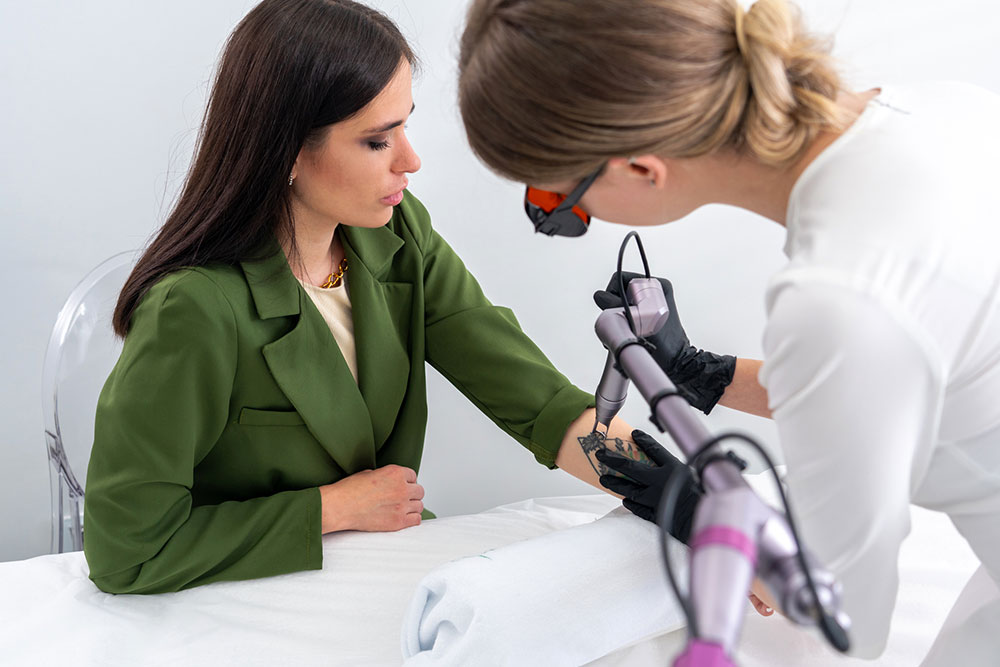
A laser tattoo removal treatment delivers energy that is absorbed by selected pigments. This energy breaks some of the tattoo ink particles into smaller fragments. The body’s immune system then gradually processes and clears those fragments over the weeks that follow.
Only part of the pigment can be treated safely during one appointment. Tattoo artists may also place ink in numerous passes and at slightly different depths. Attempting to target every layer aggressively in one sitting would increase the risk of skin injury rather than produce safe, immediate removal.
The American Academy of Dermatology explains that a laser cannot safely break down all tattoo ink layers in one treatment. The skin also needs time to heal between appointments. Temporary redness, swelling and blistering can occur after treatment, making an appropriate recovery interval an important part of the process.
This is why tattoo removal before and after images should be viewed in context. A photograph showing substantial fading may represent several months—or more than a year—of carefully spaced treatment rather than one dramatic session.
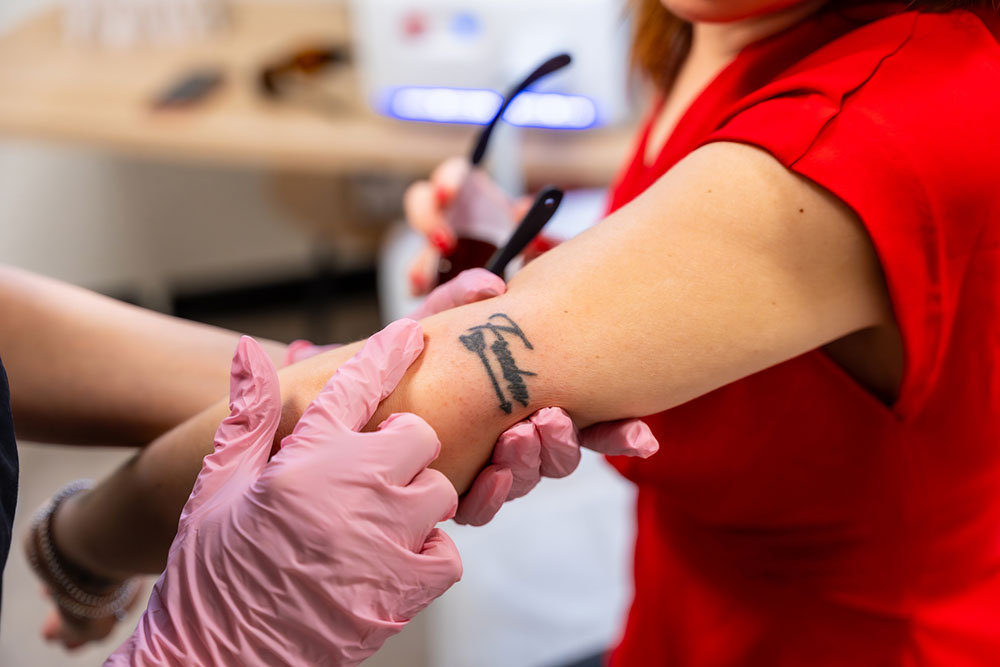
What Determines How Many Sessions You’ll Need?
Tattoo removal is assessed as a combination of factors. No single characteristic provides the full answer.
Tattoo Colour
Laser tattoo removal works through the interaction between laser energy and pigment. Different ink colours absorb different wavelengths of light, so colour has a direct effect on treatment planning.
Black ink generally responds well because it absorbs a broad range of laser wavelengths. Straightforward black tattoo removal may therefore progress more predictably than removal of a multicoloured design, although saturation and depth still matter.
Dark blue may also respond well with suitable technology. Red pigment can often be treated, but it requires a different wavelength from black. Greens and turquoise shades have traditionally been more resistant, although modern picosecond technology has broadened the range of pigments that may respond.
Yellow, white, flesh-toned and some pastel inks can be difficult to target. White and cosmetic pigments may sometimes darken after laser exposure because of ingredients within the ink. A test spot or more cautious treatment plan may be recommended when the pigment composition is uncertain.
Tattoo removal by colour is therefore not a simple ranking from easy to difficult. Inks sold under the same colour name can contain different compounds, and blended shades may respond unevenly. The American Society for Dermatologic Surgery notes that different colours may require different lasers or different settings and that most tattoos need multiple treatments.
Tattoo Size
A larger tattoo normally contains more ink and covers more skin, so it may involve longer appointments or staged treatment areas.
Size alone, however, does not determine the total number of sessions. A large tattoo made with light shading could respond faster than a small symbol filled repeatedly with dense professional pigment.
Large tattoos may also be divided into sections so that the treated area remains manageable and can heal properly. This can increase the number of appointments needed to treat the entire design, even when each individual section responds well.
Tattoo Age
Older tattoos have often faded before laser treatment begins. Sun exposure, gradual pigment breakdown and the body’s long-term response to the ink may leave less visible pigment to remove.
Newer tattoos frequently appear sharper and more saturated. Their ink may be denser and more intact, which can add to the number of treatments required.
Age is not a guarantee, though. A decades-old professional tattoo may still contain deeply placed, concentrated pigment. A newer amateur tattoo may have been applied lightly and respond relatively quickly. The ASDS similarly notes that newer tattoos tend to be more difficult to remove than older ones, while also emphasizing that complete removal is not always possible.
Tattoo Location
The immune system is responsible for clearing the fragments produced during treatment, so circulation and lymphatic activity around the tattoo can influence fading.
Tattoos on the upper body—such as the chest, shoulders and upper arms—may respond more readily than tattoos on the hands, ankles or feet. Areas farther from the heart generally have less robust circulation, and healing can feel slower.
Location also affects practical recovery. A tattoo on the foot may be exposed to rubbing from shoes. A hand tattoo is difficult to protect completely during normal daily activity. Friction, movement and sun exposure all need to be considered when appointments are planned.
This does not mean a tattoo on the leg, hand or foot cannot be treated. It means the location becomes part of the estimate rather than being treated as an incidental detail.
Professional vs. Amateur Tattoos
Professional tattoos tend to contain more ink placed at a relatively consistent depth. Artists may use repeated passes to create solid lines, shading and saturated colour. This makes the tattoo visually durable, but it may also mean that more pigment must be cleared.
Amateur tattoos are often applied less evenly. They may contain less ink and sit more superficially, so some respond in fewer sessions. Their inconsistency can create another challenge: one section may fade quickly while a deeper section remains visible.
Professional tattoo removal is therefore rarely judged from the tattoo’s appearance alone. The provider will look for variations in depth, texture, density and previous fading.
Ink Density
Density can matter as much as the overall dimensions.
A fine-line tattoo and a solid black square of the same size do not contain comparable amounts of pigment. Heavy saturation, repeated passes and densely packed shading usually create more work for both the laser and the body’s clearance process.
Cover-up tattoos can be particularly complex. They may contain:
- the original pigment;
- additional colour used to conceal it;
- several layers of ink;
- darker or denser sections placed over the old design;
- scar tissue from the original tattooing process.
A cover-up may begin to reveal parts of the older design as the upper layer fades. This does not mean the treatment has failed. It means the underlying pigment has become visible and must be assessed as part of the continuing plan.
Skin Type
Skin type affects how laser energy is selected and delivered.
Providers commonly refer to the Fitzpatrick scale, which groups skin according to its typical reaction to ultraviolet exposure. This is only one part of the assessment, but it helps guide treatment settings and safety precautions.
Tattoo pigment is not the only pigment that can absorb laser energy; the skin’s natural melanin can absorb it as well. With deeper skin tones, settings and treatment intervals may need to be adjusted to reduce the possibility of temporary lightening, darkening or other pigment changes.
A longer or more conservative plan does not necessarily indicate poor progress. It may reflect appropriate treatment planning for the patient’s skin.
Individual Healing Response
The laser fragments the pigment, but the body carries out much of the clearing afterward. Immune response, circulation and healing therefore contribute to how quickly fading becomes visible.
People do not recover at identical rates. Health history, medications, existing skin conditions and previous reactions to laser procedures may affect the plan. Smoking has also been associated in clinical literature with less favourable tattoo-removal response, although it is only one consideration and cannot predict an individual result on its own.
Aftercare matters as well. Keeping the area clean, avoiding picking or scratching, protecting it from unnecessary friction and following sun-exposure guidance can support orderly healing. Good aftercare cannot guarantee faster removal, but poor healing may require treatment to be delayed.
Average Number of Laser Tattoo Removal Sessions
Published estimates vary because tattoo-removal studies involve different devices, pigments and treatment goals. Many professional tattoos fall somewhere around six to twelve sessions, while easier tattoos may need fewer and complex layered tattoos may need more.
The ranges below are broad planning examples—not promises.
| Tattoo type | Possible treatment range* |
| Small, lightly applied amateur tattoo | Approximately 3–6 sessions |
| Small professional black tattoo | Approximately 5–8 sessions |
| Medium professional tattoo | Approximately 6–10 sessions |
| Large or multicoloured tattoo | Approximately 8–12+ sessions |
| Dense, layered or cover-up tattoo | Often 10–15+ sessions |
*These are general estimates only. Colour, depth, skin type, location, desired degree of fading and individual response may shorten or extend the plan.
Clinical research has reported wide variation in response, including picosecond-laser studies in which substantial pigment clearance occurred across treatment courses ranging from one to ten sessions. That variation reinforces why a consultation is more useful than relying on a universal average.
Some patients are seeking complete tattoo removal. Others need only enough fading for a tattoo artist to place a new design. The target outcome changes the likely number of sessions.
How Long Does Complete Tattoo Removal Take?
Laser tattoo removal sessions are usually spaced several weeks apart. The precise interval depends on the treated area, skin response, device settings and provider assessment.
Fading continues after the visible surface has healed. Treating again too soon does not necessarily make removal faster because the body has not finished processing the fragmented pigment. Shortening intervals unnecessarily may instead increase irritation and the risk of pigment or textural changes.
For example, a plan involving eight sessions spaced roughly eight weeks apart already extends beyond one year. Longer intervals, pauses for sun exposure or delayed healing, and treatment of a large tattoo in sections can extend the overall tattoo removal timeline further.
Removal should therefore be planned as a gradual process. The calendar matters just as much as the number of appointments.
Can Every Tattoo Be Completely Removed?
Many tattoos fade considerably, and some become difficult to see. Complete tattoo removal, however, cannot be guaranteed.
Residual pigment may remain because of:
- resistant ink colours;
- deeply placed pigment;
- layered or cover-up ink;
- an unknown ink formulation;
- pre-existing scar tissue;
- limits on settings that can be used safely for the patient’s skin;
- changes in skin colour or texture that existed before removal began.
Occasionally, the tattoo pigment fades but a faint outline remains because the original tattooing created scarring. This is why the skin itself should be examined during the consultation rather than assessing colour alone.
Once removal is complete or the tattoo has faded as much as expected, separate skin rejuvenation or scar assessment may be discussed where appropriate. These treatments address the skin rather than remaining tattoo pigment and are not automatically needed by every patient.
Can Fewer Sessions Be Needed?
Yes. Some tattoos respond in fewer treatments than the broad averages suggest.
This may occur with:
- a small black tattoo;
- a naturally faded older tattoo;
- an amateur tattoo containing relatively little ink;
- fine lines rather than dense fill;
- pigment placed more superficially;
- treatment intended to fade the design for a cover-up rather than remove every visible trace.
It is still difficult to confirm this from a photograph. Ink depth, scarring and subtle colour mixtures are easier to evaluate in person.
Tattoo Removal at Philosophy of Beauty
Philosophy of Beauty provides laser tattoo removal in Vaughan for patients from across Toronto and the Greater Toronto Area.
The clinic uses PicoWay® technology, with each plan based on the tattoo’s colour, size, density, age and location, as well as the patient’s skin type and treatment goal. A consultation also allows the provider to look for existing scarring, discuss previous laser treatments and explain whether complete removal or partial fading is the more realistic outcome.
“One of the biggest misconceptions is that every tattoo takes the same number of treatments to remove. In reality, colour, ink depth, skin type, and even where the tattoo is located all influence how your treatment plan is designed.”
— Philosophy of Beauty
Patients researching tattoo removal Toronto or GTA treatment options can book a consultation at Philosophy of Beauty for a personalized assessment. The estimate may still change as the tattoo responds, but an in-person examination offers a far more useful starting point than a fixed session promise.
Frequently Asked Questions
How many tattoo removal sessions do most people need?
Many professional tattoos require approximately six to twelve sessions, but some need fewer and others require more. Colour, density, age, location, skin type and the desired degree of clearance all affect the estimate.
Why can’t a tattoo be removed in one treatment?
Tattoo ink is deposited in layers within the skin. A laser can safely fragment only part of that pigment during each treatment, after which the body needs time to clear the particles and the skin needs time to recover.
Which tattoo colours are hardest to remove?
Yellow, white, pastel shades and certain turquoise or green pigments can be more resistant or unpredictable. The ink formulation and laser wavelengths available are also important, so colour alone cannot predict the outcome.
Do older tattoos fade faster?
Older tattoos often respond more quickly because some pigment has already broken down or faded. A heavily saturated older tattoo may still require an extended course, however.
Are amateur tattoos easier to remove?
They can be. Amateur tattoos often contain less ink placed closer to the surface. Uneven depth may cause irregular fading, with some sections clearing sooner than others.
Does tattoo size affect treatment time?
Yes, but size is not the only consideration. A larger tattoo contains more ink and may need to be divided into treatment sections. A small, densely saturated tattoo can still require numerous sessions.
Why are sessions spaced several weeks apart?
The spacing allows the skin to heal and gives the immune system time to process fragmented tattoo ink. Treating the area again before it has recovered does not guarantee faster removal and may increase the chance of complications.
Can all tattoos be completely removed?
No provider can promise complete removal of every tattoo. Many fade substantially, but resistant colours, deep pigment, layered ink or pre-existing scarring may leave a faint trace.
Will cover-up tattoos require more sessions?
Often, yes. A cover-up contains at least two layers of pigment and is usually designed with denser or darker ink. As the newer layer fades, parts of the original tattoo may become visible and require further treatment.
How can I estimate how many treatments I’ll need?
Book a tattoo removal consultation. The provider can assess colour, size, saturation, depth, location, skin type, scarring and your preferred result before giving an initial treatment estimate.