
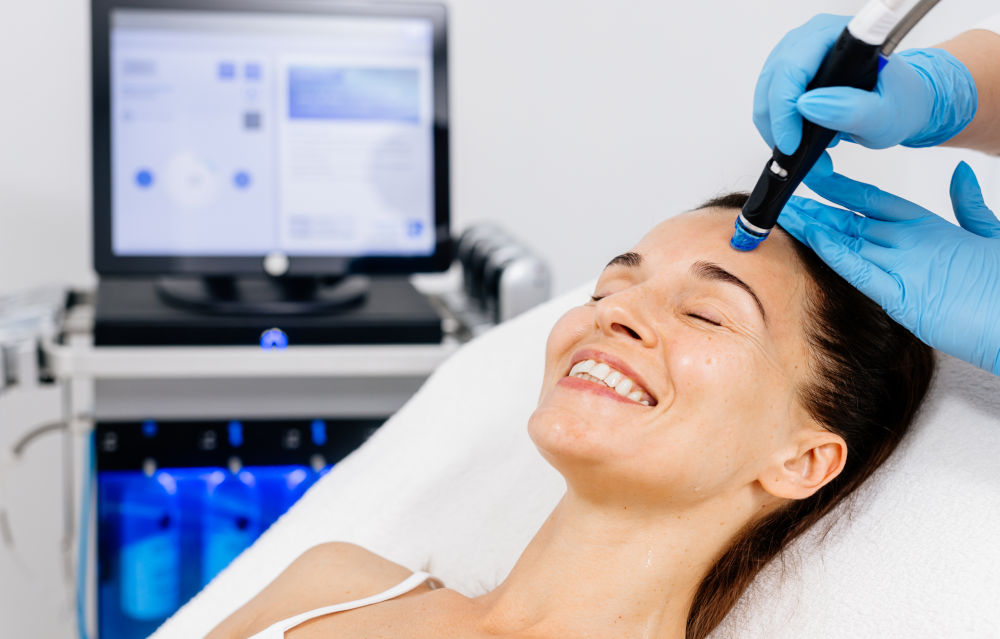
HydraFacial has become closely associated with glowing skin. That is probably fair: many people book it because they want their complexion to look fresher without peeling, bruising or taking several days away from their usual routine.
The better question, though, is whether that is what your skin actually needs.
Who is HydraFacial best for? Usually, someone dealing with dullness, dehydration, clogged pores, blackheads or mild surface roughness. It can also work well as straightforward skin maintenance or before an event.
There are limits. A facial that cleans, exfoliates and hydrates the skin is not going to remodel a deep acne scar, replace facial volume or tighten genuinely lax skin. Persistent pigmentation and established wrinkles may also call for something more targeted.
Knowing where HydraFacial fits makes it much easier to decide whether it is worth booking.
Key Takeaways
- HydraFacial cleanses, exfoliates, extracts pore debris and replenishes hydration during one appointment.
- It tends to be most useful for dullness, dehydration, blackheads, mild congestion and superficial texture.
- The treatment can be adjusted to suit different skin types and priorities.
- Most people return to normal activities straight afterwards, although mild temporary redness or sensitivity can happen.
- Deeper scars, marked pigmentation, significant wrinkles and laxity sit outside HydraFacial’s main strengths.
- Some patients book it occasionally; others use it as part of regular skin maintenance.
- A skin assessment is worthwhile when it is unclear whether the problem sits at the skin’s surface or needs a deeper treatment.
What Does a HydraFacial Actually Do?
HydraFacial combines several things that would traditionally have been separate parts of a facial.
The skin is cleansed and lightly exfoliated. Congested pores can then be cleared with suction rather than manual squeezing, after which hydrating topical ingredients are applied to freshly treated skin.
Philosophy of Beauty currently uses the HydraFacial Syndeo™ platform. The treatment can be adjusted rather than carried out identically on every patient.
That flexibility is useful because dry skin and an oily, congested T-zone do not need quite the same attention.
The immediate change comes largely from what has happened at the surface. Dead-cell buildup has been reduced, pores may be cleaner and the outer skin layers are better hydrated. Skin consequently tends to feel smoother and catch the light differently.
For a full appointment walkthrough, Philosophy of Beauty already covers the process in What to Expect at Your HydraFacial Treatment. Here, we are more interested in what those steps can realistically accomplish.
Who Is HydraFacial Best For?
Age is not especially helpful when deciding.
A 24-year-old with stubborn blackheads may get more value from HydraFacial than a 45-year-old whose real concern is skin laxity. Equally, someone with mature skin may enjoy HydraFacial regularly because dryness and dullness bother them more than wrinkles do.
Think about the problem first.
If it is sitting largely at the surface — dryness, buildup, mild congestion or loss of brightness — HydraFacial is often a sensible place to start. Problems involving scar tissue, substantial pigment, deeper wrinkles or loss of structural support are another matter.
HydraFacial for Dull and Dehydrated Skin
This is probably HydraFacial’s most natural territory.
Skin can look dull simply because its surface is dry and uneven. Dead cells accumulate, hydration falls and the complexion loses some of the smoothness that allows light to reflect evenly.
Exfoliation deals with the buildup; the hydrating stage addresses the dry surface left behind.
Someone with thirsty, tired-looking skin can therefore see a fairly quick cosmetic difference. The face may feel softer, look less flat and take makeup more evenly.
These HydraFacial benefits are real, but they should not be confused with permanent change. Your skin continues to lose water after the appointment. Weather, home skincare, barrier health and daily habits still matter.
For that reason, many people use the treatment as maintenance rather than expecting one facial to permanently fix dehydrated skin.
HydraFacial for Congested Pores and Blackheads
Congestion is another good fit, especially when the problem is blackheads and surface buildup rather than painful inflammatory acne.
Sebum mixes with dead skin cells inside the pore. When that material accumulates, you may see blackheads, whiteheads or a generally bumpy texture around the nose, chin and forehead.
With a HydraFacial for clogged pores, suction-assisted extraction helps clear some of that material without the repeated pressure used during manual extraction.
For someone whose skin is basically healthy but persistently clogged, that can be useful.
Acne needs a little more care in how we talk about it. A scattering of blackheads is not the same clinical problem as widespread inflamed papules, nodules or cysts.
When acne is painful, persistent or inflammatory, Philosophy of Beauty may recommend a broader acne treatment plan rather than relying on facials alone.
HydraFacial for Uneven Texture and Mild Fine Lines
A lot of what people call “texture” is surprisingly superficial.
Dry skin can look finely lined. A little buildup can make it feel rough. Once the surface is exfoliated and rehydrated, both can appear better.
That is the level at which HydraFacial is useful.
Fine dehydration lines may look softer for a while because hydrated skin is plumper. Mild roughness can feel smoother after exfoliation. Neither effect is equivalent to remodelling a wrinkle or acne scar.
Established acne scars involve altered tissue deeper in the skin. Deeper wrinkles also extend beyond what a hydrating facial can meaningfully change.
Those concerns may lead to treatments such as microneedling, RF microneedling or laser resurfacing instead.
So if the goal is “my skin feels rough”, HydraFacial may fit nicely. If the goal is “I want these indented scars rebuilt”, it probably is not the main treatment.
Can HydraFacial Help With Pigmentation?
There is a small but important difference between brighter-looking skin and treating pigmentation.
Exfoliating a dull surface can improve brightness. Appropriate topical ingredients may also help the complexion look more even. This is why a HydraFacial for pigmentation can sometimes seem effective after a session.
But a diagnosed pigment problem has its own biology.
A sun spot, post-inflammatory pigmentation and melasma are not interchangeable. Pigment may sit at different depths, and treatment that suits one condition may aggravate another.
HydraFacial can certainly sit within a skincare plan for somebody who also has uneven tone. It should not be sold as though it reliably clears all hyperpigmentation.
For persistent discolouration, Philosophy of Beauty’s guide to melasma, sun spots and post-acne pigmentation is a more appropriate starting point.
Is HydraFacial Good for Sensitive Skin?
Often, yes. Automatically, no.
Sensitive skin is not a diagnosis in itself. One person may simply flush easily. Another may have rosacea. Someone else may have an irritated barrier after overusing retinoids, acids and exfoliating products.
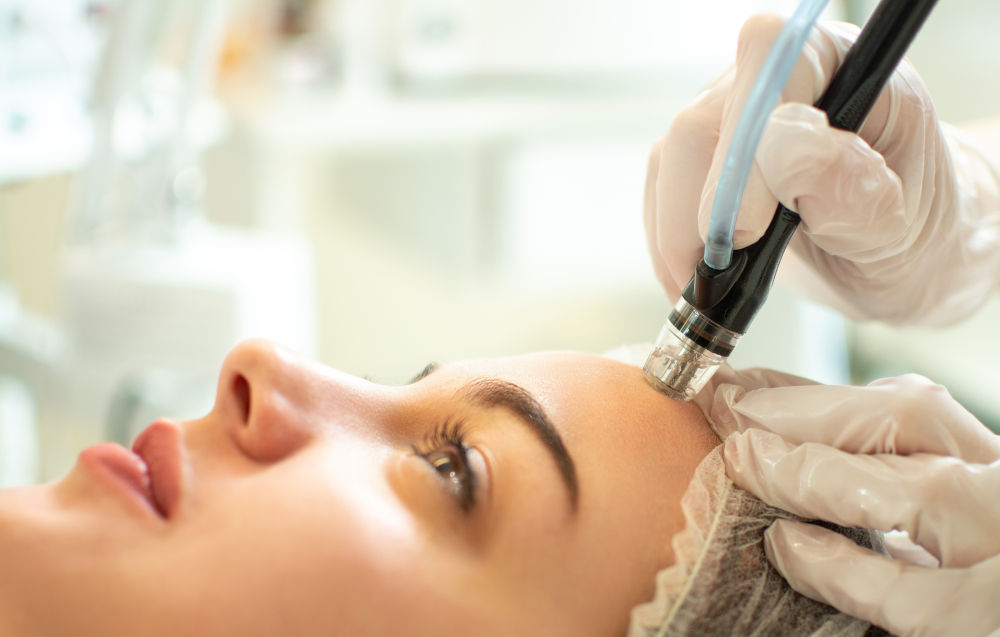
A HydraFacial for sensitive skin can be adjusted to be gentler, which is one reason the treatment works for a broad group of patients.
There are also times when the kindest thing to do is nothing.
If skin is actively irritated, broken, inflamed or reacting after another procedure, even gentle exfoliation may be poorly timed. The same applies during some inflammatory skin flares.
Philosophy of Beauty addresses this in more depth in its article on HydraFacial for rosacea and sensitive skin. The central point is sensible: assess the skin that turns up that day rather than assuming the usual protocol is appropriate.
Is HydraFacial Good for Acne-Prone Skin?
It can be, particularly for people who are oily, prone to blackheads or regularly develop blocked pores.
A HydraFacial for acne prone skin helps by clearing surface buildup and extracting some of the material trapped in pores. That can make it a useful part of an acne routine.
Where people get into trouble is calling that an acne treatment for everyone.
Inflamed acne can involve much more than dirty or clogged pores. Hormonal influences, sebum production, inflammation and individual skin behaviour all come into play.
Deep or painful acne deserves proper assessment. Aggressively extracting already inflamed skin is not a substitute for treating the condition behind the breakouts.
HydraFacial works better here as a selective tool than as a cure-all.
Is HydraFacial a Good Treatment Before an Event?
Yes, and this is one of the reasons it has remained so popular.
A wedding, work event, photoshoot or celebration often creates a very specific request: “I want my skin to look good, but I cannot risk peeling for a week.”
HydraFacial suits that situation because it generally has minimal recovery and the hydration effect is visible relatively quickly. Freshly exfoliated skin can also give makeup a smoother base.
There is still no reason to schedule your first-ever appointment on the morning of your wedding.
Skin can flush. An ingredient may not agree with you. A recently extracted area can look slightly pink. Most reactions are minor, but an important event is not the day to discover how your skin behaves.
Leave a little margin, particularly if you know your complexion is reactive.
Who May Need Something More Advanced Than HydraFacial?
This is where treatment selection becomes much easier.
Deep Acne Scars
HydraFacial can clean the surface of scarred skin, but it does not reconstruct an established atrophic scar.
Microneedling, RF microneedling, laser resurfacing and other scar-specific techniques work by creating a controlled response deeper in the skin. The correct option depends on scar type.
Significant Pigmentation
If pigmentation is obvious, persistent or recurrent, it should first be identified properly.
A targeted plan might involve medical-grade skincare, chemical peeling, laser or light-based treatment. HydraFacial may still be used for general skin maintenance, but it does not replace pigment-specific therapy.
Skin Laxity
Hydrated skin can look temporarily plumper. Loose skin is different.
Laxity involves structural change and may be better suited to treatments designed to stimulate or contract tissue, including selected RF, laser or ultrasound technologies.
Deeper Wrinkles or Volume Loss
If a fold is caused partly by lost facial volume, no amount of surface exfoliation will replace that support.
Similarly, an established wrinkle will generally need more than hydration if the aim is meaningful correction.
Injectables, resurfacing or collagen-stimulating treatment may be discussed depending on the cause and the patient’s goals.
How Often Should You Get a HydraFacial?
There is no particularly good reason to make everyone follow the same calendar.
Someone booking HydraFacial twice a year before important occasions may be perfectly happy with that. Another patient may come regularly because their skin becomes congested despite appropriate home care.
Some maintenance patients choose appointments roughly every four to six weeks. That is an option, not a rule.
How oily the skin is, how quickly congestion returns, what products you use at home and what you actually want from treatment are more useful than a pre-set package.
If a clinic recommends a regular schedule, you should be able to understand why.
How Long Do HydraFacial Results Last?
The first changes tend to be the easiest to see.
Skin looks more hydrated. It feels smoother. Pores that were extracted may appear cleaner. Dullness is often less obvious.
Exactly how long those HydraFacial results remain noticeable varies.
Oil begins collecting again. Dead cells continue to shed. Skin hydration changes from day to day. Your normal skincare, climate and skin condition all influence how quickly the complexion returns toward baseline.
That is why HydraFacial makes more sense as maintenance than as a permanent correction.
Philosophy of Beauty explores the subject separately in How Effective Is a HydraFacial?.
HydraFacial at Philosophy of Beauty
At Philosophy of Beauty, HydraFacial is not treated as the default answer whenever somebody wants better skin.
The clinic uses HydraFacial Syndeo™, but the more useful part of the appointment happens before the device is switched on: looking at what is bothering the patient and deciding whether a surface-focused facial is capable of changing it.
Treatment can then be adapted around hydration, congestion, sensitivity and other day-to-day skin concerns. Medical-grade skincare or another procedure may make more sense when the problem sits deeper.
“HydraFacial is a great option when the goal is hydration, brightness, and gentle pore cleansing, but it is not the answer to every skin concern. The first step is understanding what the patient actually wants to improve and choosing the treatment accordingly.”
— Dinara Shakirova, RN, Philosophy of Beauty
Patients looking for HydraFacial in Toronto or HydraFacial in North York can visit Philosophy of Beauty for an assessment rather than having to decide on the treatment themselves. The clinic also serves Vaughan and surrounding GTA communities.
If HydraFacial fits the concern, a treatment plan can be customized accordingly. If it does not, the consultation is a chance to discuss what would make more sense.
Learn more about HydraFacial at Philosophy of Beauty.
Frequently Asked Questions
Who is HydraFacial best for?
It tends to suit people who want better hydration, brighter-looking skin, mild pore clearing or improvement in superficial roughness without significant downtime. It can also be used as occasional or regular skin maintenance.
What skin concerns does HydraFacial help with?
Common reasons for booking include dullness, dehydration, blackheads, oily congestion and mildly uneven surface texture. It can temporarily soften very fine lines that are more noticeable when skin is dry.
Is HydraFacial good for acne-prone skin?
It may be useful when acne-prone skin is oily or congested, particularly with blackheads and whiteheads. Deep, cystic or highly inflamed acne usually needs a more specific acne plan.
Can HydraFacial help with pigmentation?
It can improve brightness and may make superficial uneven tone look better. Persistent sun spots, melasma or post-inflammatory pigmentation often need treatment selected specifically for the pigment problem.
Is HydraFacial suitable for sensitive skin?
It can be, because treatment intensity is adjustable. Active irritation, a compromised skin barrier or an inflammatory flare may be reasons to postpone or modify treatment.
Does HydraFacial help with wrinkles?
Hydration can make very fine surface lines look softer temporarily. HydraFacial does not provide the same tissue remodelling as treatments designed for established wrinkles.
How often should you get a HydraFacial?
There is no compulsory schedule. Some patients come occasionally; others use it as regular maintenance. Frequency should reflect skin behaviour, goals and home care rather than a blanket treatment package.
How long do HydraFacial results last?
Hydration, smoothness and radiance are temporary and vary from person to person. Ongoing skincare and repeat treatment can help maintain the appearance.
Is HydraFacial good before a wedding or special event?
It is commonly chosen before events because recovery is usually minimal and skin often looks fresher soon afterwards. If it is your first HydraFacial or your skin is sensitive, leave some time between the appointment and the event.
When should you choose another treatment instead of HydraFacial?
Another procedure may be more suitable when the main concern is deep acne scarring, established pigmentation, significant laxity, deeper wrinkles or volume loss. Those problems usually require treatment below the superficial layers addressed by HydraFacial.