

Most anti-ageing conversations begin with the face. The hands often get noticed later.
That is slightly ironic. The backs of the hands spend years exposed to sunlight, driving, cold weather, repeated washing and cleaning products, often with far less sunscreen or skincare than the face receives. At the same time, normal ageing changes the skin and the tissue underneath it.
The result can be a mixture of fine lines, rough or crepey texture, brown spots, thinning skin and increasingly visible veins or tendons.
The important point is that aging hands are not one problem. A pigment treatment cannot replace lost volume. Filler will not clear a sun spot. And improving hydration alone will not rebuild substantial tissue that has disappeared with age.
Effective hand rejuvenation begins by identifying what is actually making the hands look older.
Key Takeaways
- The hands age at several levels: skin quality changes while the underlying soft tissue can also lose volume.
- Wrinkles on hands, pigmentation and volume loss therefore need different treatment strategies.
- Laser or light-based treatments may be used for sun damage and uneven pigmentation, while collagen-focused treatments are aimed more at texture and firmness.
- Dermal filler can restore some of the cushioning lost from the backs of the hands and may make veins and tendons look less prominent.
- Filler does not remove hand veins.
- When several changes are present, treatments may be combined or staged.
- Daily sun protection remains one of the most useful ways to limit further photodamage and protect treatment results.
Why Do Hands Look Older With Age?
A youthful hand has more than smooth skin. There is also enough underlying soft tissue to soften the outline of bones, tendons and veins.
That changes gradually.
Collagen and elastin decline and reorganize with age, leaving the skin less firm and resilient. The skin itself can become thinner and hold less water, so fine lines and dryness are more obvious. At the same time, loss of subcutaneous fat reduces the natural padding over the structures underneath.
This is why a hand can begin to look more skeletal even if there is nothing wrong with the veins or tendons themselves. They are simply less concealed.
Then there is sun exposure. The backs of the hands are chronically exposed to ultraviolet radiation, which contributes to wrinkling, uneven pigmentation and solar lentigines, the flat brown marks commonly called age spots or sun spots.
How quickly these changes appear varies. Genetics play a role, as do accumulated UV exposure, smoking, environmental exposure, occupation, skincare habits and how often the hands are exposed to detergents and repeated washing.
What Are the Most Common Signs of Aging Hands?
Before choosing an aging hands treatment, it helps to separate three concerns that are often bundled together.
Wrinkles and Crepey Skin
Fine lines on the hands usually reflect several overlapping changes: thinning skin, collagen and elastin loss, dryness and reduced elasticity.
Sometimes the skin looks less like a collection of individual wrinkles and more like thin, crinkled paper. This “crepey” texture can become more noticeable when the hand is stretched or when underlying volume has also decreased.
Surface dryness can exaggerate the effect, but moisturizer alone cannot correct deeper structural ageing.
Brown Spots and Uneven Pigmentation
Repeated UV exposure can lead to age spots on hands, medically called solar lentigines. They tend to appear on chronically sun-exposed areas and may become more numerous with age.
Not every brown mark is a harmless sun spot, however.
A new lesion, one that changes shape or colour, looks markedly different from nearby spots, becomes symptomatic, or has irregular features should be medically assessed before anyone tries to remove it cosmetically. Pigment should be diagnosed before it is treated.
Volume Loss and Visible Veins or Tendons
This is a different issue altogether.
As the tissue on the back of the hand becomes thinner, there is less padding over veins, tendons and bones. The hand may start to look hollow or bony, and veins that were always present can suddenly become much more noticeable.
This is why visible veins on hands do not always represent a vein problem.
Sometimes the dominant issue is simply loss of the soft tissue that used to camouflage them.
What Helps With Wrinkles and Crepey Skin on the Hands?
When skin quality is the main concern, treatment generally focuses on improving hydration, surface texture or collagen remodelling.
Laser and energy-based skin rejuvenation can be used in selected patients to create controlled stimulation within the skin. Depending on the technology, the objective may be mild resurfacing, collagen renewal, improvement in tone or some tightening.
Microneedling and radiofrequency-based treatments can also be considered when textural change and reduced firmness are prominent. They work differently from pigment-targeting treatments: the goal is to initiate repair and collagen remodelling rather than simply remove a brown spot.
Chemical peels can sometimes improve superficial roughness and uneven tone, while medical-grade skincare may help with dryness, texture and maintenance.
Philosophy of Beauty currently offers several skin rejuvenation options for the hands, with treatment chosen according to the actual concern rather than using one procedure for everyone.
The limitation matters as much as the potential benefit. A non-surgical procedure may improve crepiness and skin quality, but it cannot recreate every structural feature of younger skin or fully reverse advanced thinning.
What Helps With Age Spots and Pigmentation on the Hands?
Pigmentation requires a different plan.
Solar lentigines develop after cumulative UV exposure, so treatment is usually directed at excess pigment rather than lost collagen or volume.
Depending on the diagnosis and skin type, options may include light- or laser-based pigmentation treatment, chemical peeling or pigment-correcting skincare. Philosophy of Beauty’s hand treatment page currently includes IPL photorejuvenation for brown spots and uneven tone, while the clinic also offers broader pigmentation treatment across its laser portfolio.
The useful question is not simply, “Which laser removes age spots?” It is first, “What kind of pigmentation is this?”
A solar lentigo, melasma and post-inflammatory pigmentation behave differently and should not automatically receive the same treatment. Philosophy of Beauty discusses that distinction further in its guide to melasma, sun spots and post-acne pigmentation.
Even after successful hand pigmentation treatment, new spots can appear. Treatment does not remove the skin’s history of UV exposure or prevent future photodamage.
That is why sunscreen is part of pigmentation management, not an optional extra after the procedure.
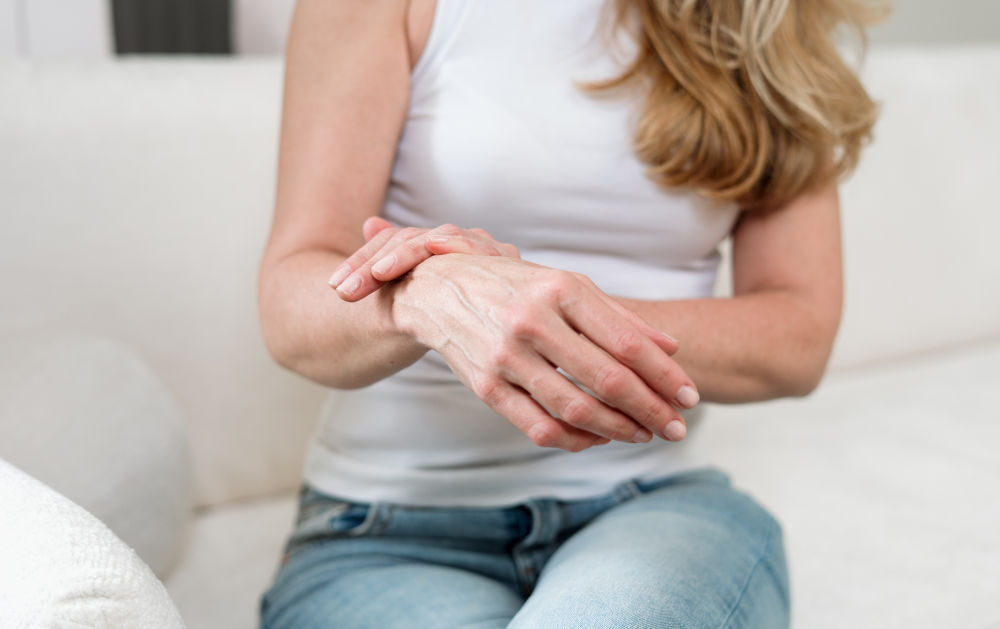
What Helps With Volume Loss in Aging Hands?
Skin treatments cannot replace missing volume.
When the backs of the hands have become hollow and tendons, veins and bones are increasingly visible, hand fillers may be considered.
Dermal filler is placed beneath the skin to restore some of the cushioning that has been lost. The aim is not to make the hand look swollen or overfilled. Done conservatively, it can soften the transition over tendons and bones and reduce the visual prominence of superficial veins.
Philosophy of Beauty currently includes dermal fillers for hands within its hand-rejuvenation service and uses injectable treatment specifically for dorsal hand volume loss.
You can read more about how the clinic approaches dermal fillers.
There is one distinction worth repeating: filler does not remove veins. It adds tissue above and around them, which may make some veins less obvious.
If a vein itself is unusually prominent and the patient wants it treated directly, that is a different discussion.
Hand Fillers vs Laser: Which Treatment Do You Need?
This is where many treatment searches go wrong. Filler and laser are not competing solutions to the same problem.
They treat different things.
| Main Concern | Treatment Direction | What It Targets |
|---|---|---|
| Brown spots / sun damage | Pigment-targeting treatment | Excess pigmentation |
| Fine lines / rough texture | Skin rejuvenation | Texture and collagen |
| Crepey or mildly lax skin | Collagen-stimulating treatment | Skin quality and firmness |
| Visible veins and tendons caused by volume loss | Dermal filler | Lost volume and cushioning |
| Several signs of ageing together | Combination approach | More than one tissue change |
This table is general educational guidance. Suitability depends on skin type, diagnosis, medical history and an in-person assessment.
If pigmentation is what draws your eye first, adding filler alone is unlikely to make the hands look substantially more even. If the skin is relatively clear but there is obvious hollowing between the tendons, a pigment treatment will not restore the lost cushioning.
The treatment should follow the problem, not the other way around.
Can You Treat Pigmentation, Wrinkles, and Volume Loss Together?
Sometimes.
A patient may have obvious sun spots, thin crepey skin and volume loss at the same time. In that situation, using only one treatment can leave the other changes untouched.
A plan might therefore use:
- dermal filler to restore volume;
- light or laser treatment for unwanted pigmentation;
- a collagen-stimulating procedure for texture and firmness.
That does not mean everything needs to be performed in one visit.
Depending on the procedures selected, the skin may need to recover between treatments, or the provider may prefer to address one concern before evaluating how much correction is still needed elsewhere.
A combination plan should have a reason behind it. More treatment is not automatically better treatment.
What About Visible Veins on Aging Hands?
Visible veins deserve their own discussion because they are often the feature that makes someone notice their hands have changed.
With age, the skin and subcutaneous tissue become thinner, so veins that were previously cushioned become easier to see.
In that situation, filler may make the hand look smoother by replacing some of the missing volume above and around those vessels.
But again, hand filler does not eliminate the vein itself.
Some people have veins that remain prominent even after volume has been restored. Direct treatment of a hand vein involves a different assessment, including its size, location and role in circulation. It should not be approached as though it were simply another filler indication.
Philosophy of Beauty also treats selected vascular concerns, but whether a hand vein is appropriate for direct aesthetic treatment should be assessed individually.
Can Skincare Make Aging Hands Look Younger?
Yes, within limits.
Skincare can improve dryness, support the skin barrier, reduce roughness and help control some surface pigmentation. It is also important for maintaining the results of professional treatment.
Useful components may include:
- a rich moisturizer, particularly after washing;
- broad-spectrum SPF;
- a retinoid where appropriate and tolerated;
- antioxidant products;
- pigment-correcting ingredients selected for the type of pigmentation.
Products containing retinoids or exfoliating acids can irritate some hands, especially if the skin barrier is already compromised by frequent washing or cleaning products. They should be introduced sensibly rather than treating the backs of the hands as though they are automatically as tolerant as facial skin.
Skincare cannot replace significant volume loss in hands, however. A topical product does not rebuild lost subcutaneous fat.
How to Prevent Further Sun Damage and Hand Aging
The most useful change is also one of the easiest to forget: apply sunscreen to the backs of the hands.
The American Academy of Dermatology recommends broad-spectrum, water-resistant SPF 30 or higher on exposed skin, including the hands. Because handwashing removes sunscreen, reapplication matters when the hands will continue to be exposed outdoors.
A few practical habits help:
- keep sunscreen where you actually use it, such as near the door or in the car;
- reapply after repeated washing when outdoor exposure continues;
- moisturize after handwashing while the skin is still slightly damp;
- avoid intentional tanning;
- wear gloves for cleaning, gardening and prolonged chemical exposure;
- extend suitable facial skincare to the backs of the hands rather than stopping at the wrists.
Sun protection will not reverse established ageing, but it can slow additional photodamage and help maintain improvements after treatment.
Hand Rejuvenation at Philosophy of Beauty
A useful consultation for hand rejuvenation in Toronto or hand rejuvenation in Vaughan should not begin with a machine or syringe.
It should begin with the hands.
At Philosophy of Beauty, pigmentation, texture, laxity and volume can be assessed separately before deciding what, if anything, needs treatment. One person may mainly need help with solar lentigines. Another may have almost no pigmentation but significant volume loss. A third may benefit from a staged combination plan.
“Aging hands usually involve more than one change. Pigmentation is a skin concern, while visible tendons and veins are often related to volume loss. Identifying what is actually making the hands look older helps us choose treatments that address the right problem.”
— Dinara Shakirova, RN, Philosophy of Beauty
For patients in North York, Toronto and Vaughan, the consultation is the point at which treatment can be matched to the tissue change rather than chosen from a generic list of “anti-ageing” procedures.
The goal is not to make the hands look overfilled or artificially smooth. It is to address the features that are contributing most to an aged appearance and leave the hands looking like themselves.
Frequently Asked Questions
What makes hands look older?
Hands can look older because of thinning skin, collagen and elastin loss, reduced subcutaneous volume, chronic sun exposure, dryness and pigmentation. As cushioning decreases, veins, tendons and bones also become more visible.
What is the best treatment for aging hands?
There is no single best treatment. Pigmentation may respond to light-, laser- or pigment-focused treatment; texture may require collagen-remodelling procedures; and volume loss may be treated with dermal filler. Many patients have more than one concern.
Can wrinkles on the hands be treated?
Fine lines and crepey texture may improve with selected laser or energy-based treatments, chemical peels, microneedling, appropriate skincare and other collagen-stimulating approaches. Results depend on the degree of skin thinning and laxity.
How can you remove age spots from your hands?
Solar lentigines may be treated with options such as pigment-targeting light or laser therapy, chemical peels and selected topical products. A changing, irregular or otherwise suspicious lesion should be medically assessed before cosmetic treatment.
Do dermal fillers work for aging hands?
Dermal filler can be used to replace some of the volume lost from the backs of the hands. This can create smoother contours and reduce the prominence of tendons, bones and some superficial veins.
Can hand fillers make veins less visible?
Yes, when vein visibility is partly caused by lost soft-tissue volume. Filler adds cushioning over and around the veins, which can make them less noticeable. It does not remove or destroy the veins.
How long do hand fillers last?
Longevity varies according to the filler used, treatment technique, amount placed, metabolism and individual anatomy. Some published hand-filler studies report improvement lasting around a year, but a fixed duration should not be promised for every patient or product.
Can laser treatment improve aging hands?
Laser or other light-based treatments can be useful for selected hand concerns, particularly pigmentation and some textural changes. The appropriate technology depends on the type of pigment, skin tone and treatment goal.
Can you combine laser treatment and fillers for hand rejuvenation?
Yes, when both surface changes and volume loss are present. The treatments address different layers, so combining or staging them may make sense. They do not necessarily need to be performed at the same appointment.
How can I prevent my hands from ageing faster?
Use broad-spectrum SPF on the backs of the hands, reapply after washing when appropriate, moisturize regularly, avoid intentional tanning and protect the hands from harsh chemicals and excessive environmental exposure.